


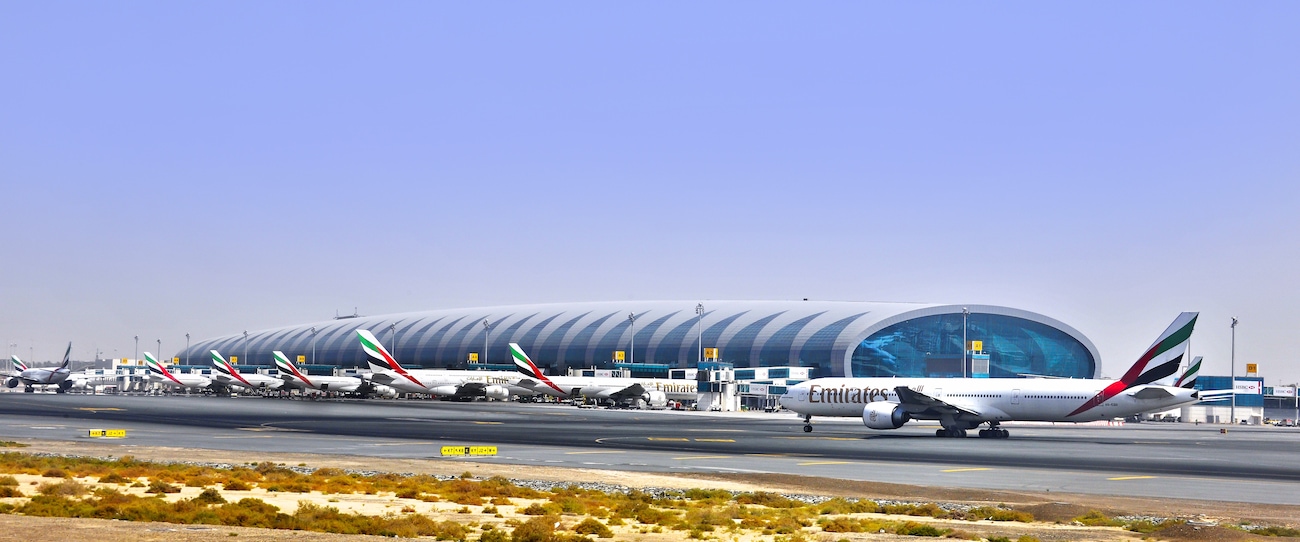

Published in Indian Express 6th September 2026
Board, sit, land - that's the illusion. Behind it, mountains, borders,
and the earth's curve write rules stranger than fiction.
Last week, we spoke about how a hotel room tells you everything about a country before you have even unpacked. Today I want to turn our attention somewhere else entirely: planes, and the strange rules that govern how, where, and whether they can actually land.
I will be honest about why. I am a flight nerd. If you have been following my Instagram, you already know how deep I go into this stuff, the routes, the runways, the aircraft. And ever since we launched flight bookings on veenaworld.com, that habit has only gotten worse. I have been falling down rabbit hole after rabbit hole on the odd corners of commercial aviation, and I started collecting these stories individually, one flight here, one airport there, before realising they actually belong together. Each one answers the same question in a completely different way: what decides how a plane gets from one point on earth to another. Let me walk you through a few.
The Captain-Only Landing
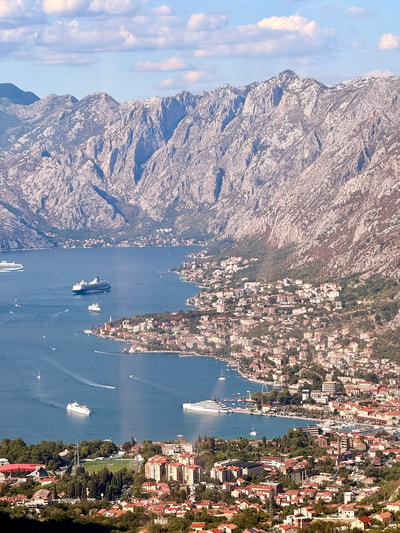
Innsbruck sits inside a valley in the Austrian Alps, boxed in by nine-thousand-foot peaks on almost every side. There is no vertical guidance beam here, the radio signal that normally tells a pilot's instruments the correct angle to descend at, feeding them a steady glide path all the way down to the runway, the terrain blocks it, so pilots fly the descent using a beacon and their own judgement, banking through the valley largely by feel. There is exactly one way in and one way out, and which one you use depends entirely on the wind that day. Add Alpine downdrafts that can arrive without warning, and Innsbruck has one of the highest flight diversion rates in Europe every winter.
Because of this, regulations require that only the captain, never the first officer, is allowed to fly the approach into Innsbruck, and only after specific training for this exact airport. At EasyJet, reportedly, fewer than four per cent of pilots hold that qualification, and some airlines require the captain to have first sat in the jumpseat for a live approach before flying the route themselves.
The scenery, ironically, is what makes the approach so demanding. Pilots track visually along the Inn Valley, following the terrain by eye, precisely because the same mountains that make the landing beautiful make a straightforward instrument approach impossible. For the pilot, it is one of the most demanding approaches anywhere in Europe. For the passenger, it is one of the most beautiful landings in the world, snow peaks close enough to touch the wingtip, a medieval city rising out of the valley floor. Difficult for the pilot. Unforgettable for you.
The Runway on the Roof of the World
If Innsbruck asks a lot of the pilot, Lukla in Nepal asks even more. Tenzing-Hillary Airport, as it is officially known, sits at nearly nine and a half thousand feet in the Khumbu region, the main gateway for trekkers heading towards Everest Base Camp. Its runway is just 527 metres long, a fraction of the length most commercial airports consider standard, and it slopes uphill at a gradient of roughly twelve per cent, steep enough that the incline itself helps slow the aircraft down after landing and helps it gather speed on the way out. One end of the runway meets a mountain wall. The other ends in a sheer drop into the valley.
There is no room here for a go-around. Once a pilot commits to the final approach at Lukla, there is no option to pull up, circle, and try again the way there would be almost anywhere else in the world. The decision has to be made earlier, and it has to be final. Only small, specially certified aircraft fly the route, mostly Twin Otters and similar short-takeoff planes, and flights operate strictly by visual rules, which means the moment cloud or mist rolls in, and it does so quickly and often in the Himalayas, every flight simply stops until it clears. Despite all of this, close to fifty flights a day move through Lukla in peak season, because for most trekkers it is this or a fortnight of walking simply to reach the point where the actual expedition begins.
The Flight That Got Four Hours Longer Overnight
Since 2022, one flight route has quietly gotten hours longer, and most passengers flying it have no idea why. Helsinki to Tokyo used to take around nine and a half hours, flying more or less straight across Russia, the shortest path the earth’s curve allows between Europe and Japan. Since Russia closed its airspace to Western airlines, and the West closed its skies to Russian ones, that flight now takes closer to thirteen hours, arcing north over Scandinavia and out over the Arctic and Alaska to avoid Russian skies entirely.
It is not weather. It is not technology. It is a border in the sky that simply did not exist for these airlines a few years ago, and it now costs every passenger several extra hours, on every single flight, indefinitely. Over 3,60,000 flights a year used to cross Russian airspace before 2022, according to European aviation regulators. Almost none of them do now. The map of the world has not changed. The sky above it has.
The Flight With No Economy Class
Here's one that has fascinated me for a while. Singapore Airlines flies the longest scheduled nonstop passenger route in the world, Singapore to New York, close to nineteen hours in the air, covering more than fifteen thousand kilometres. And there is no economy class on it at all. Only business class and premium economy.
The reason comes down to fuel. Covering that distance nonstop requires an enormous amount of it, and every kilogram the aircraft carries is weight it must lift and hold for nineteen straight hours. So the airline made a calculated trade: every economy seat removed is weight saved and range gained. Fewer, larger seats mean the aircraft can carry the fuel needed to make the distance in one stretch. The flight is so long the airline can no longer afford to sell the cheap seat that makes most long-haul routes viable in the first place.
Which makes this possibly the hardest bucket-list flight in the world to book cheap. No economy fare to chase, no seat sale to wait for. Once aboard, the airline treats the journey less like transport and more like a stay: three full meal services, cabin lighting shifted gradually to nudge your body clock towards New York time, crews rotating through dedicated rest areas because no one is expected to stay sharp for nineteen hours straight. Depart Singapore in the evening, and thanks to the International Date Line, you land in New York earlier the same calendar day you left. Somewhere around hour eleven, it stops feeling like a flight and starts feeling like a hotel moving at nine hundred kilometres an hour, forty thousand feet above the Pacific.
Why Your Flight Path Looks Wrong on the App
Next time you check a flight tracker, look at the route from Delhi to New York, or London to Los Angeles. It does not run straight across the map. It arcs up towards the Arctic. That is not a mistake, and it is not a longer route either. It is actually the shortest one.
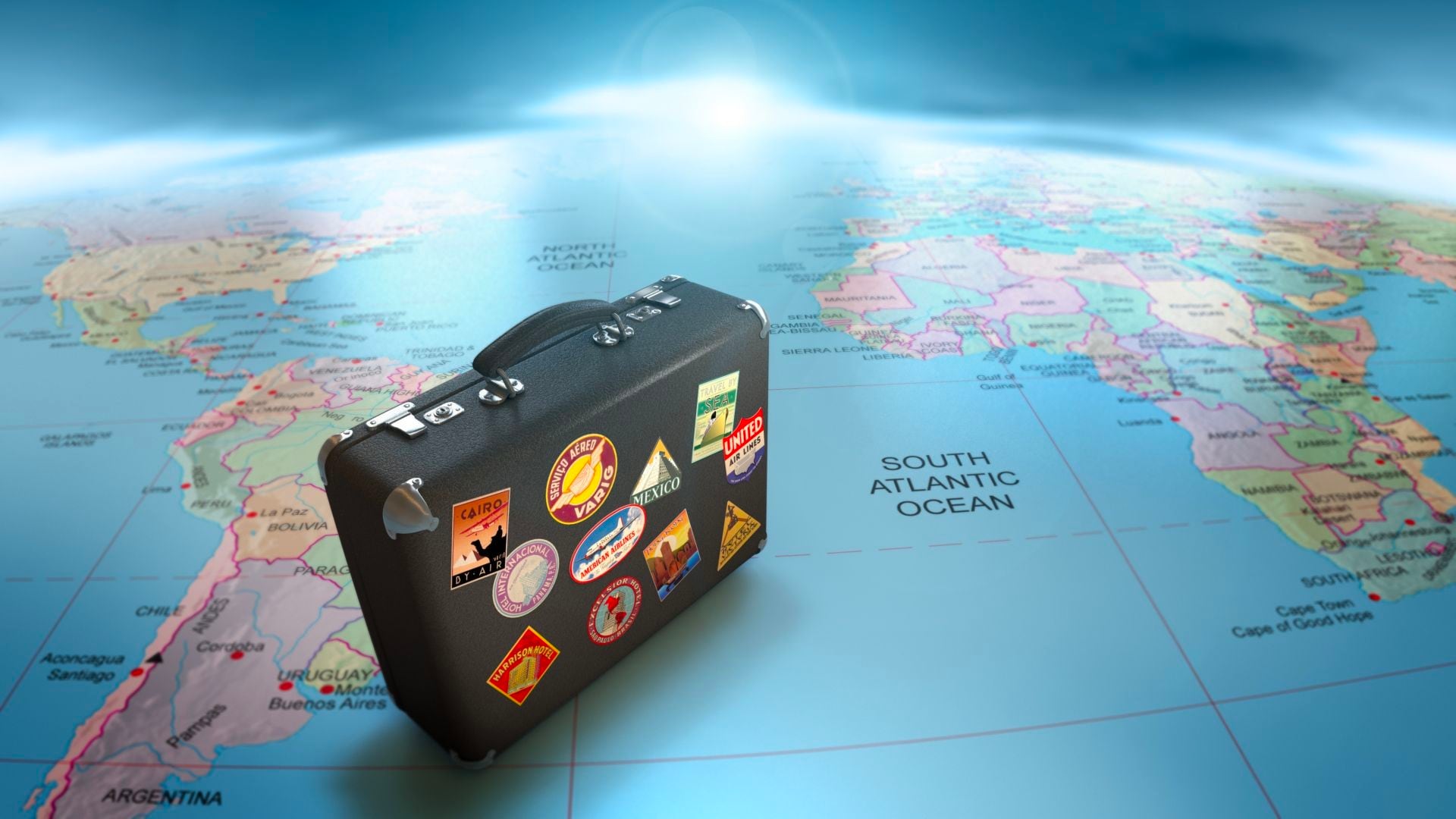
A flat map lies to you. The earth is a sphere, and you cannot flatten a sphere onto paper without distorting it, which is exactly what every map projection does. So a straight line on your phone screen is almost never the shortest real-world path. Pilots fly what is called a great circle route. Stretch a piece of string across a globe between two cities and pull it tight, and that curved-looking path on a flat map is actually the straight line, on the sphere. It only looks curved because the map is flat and the world is not.
This single fact saves airlines thousands of kilograms of fuel on every long-haul flight. The plane is not taking the scenic route. It is taking the only straight line that actually exists.
The Runway Made of Frozen Ocean
McMurdo Station in Antarctica is the busiest aviation hub on the entire continent, and for much of the season, its runway is frozen ocean, compacted and groomed sea ice, strong enough to hold aircraft the size of a C-17 Globemaster on ordinary wheels. No tarmac, no concrete, just ice thick enough not to crack under the weight.
The ice has to be constantly monitored, because if it thins, or the season turns warmer than expected, the runway simply stops existing. Some aircraft here do not use wheels at all. The LC-130 Hercules flies with retractable skis instead, and the crews who operate it have nicknamed it the skibird. There is no permanent, fixed airport at McMurdo in the way we would normally understand one. The runway itself shifts and gets rebuilt from scratch each year, on whatever ice will hold. It is, as far as I can tell, the only place on earth where the runway is seasonal, and where a successful landing depends entirely on how cold the planet has been that year.
The Flight With No Destination
And finally, my favourite of these, a flight that takes off, flies for around twelve hours, and lands back at the exact same airport it left from.
Qantas runs this from Brisbane, Melbourne, Perth, and Sydney, straight down towards Antarctica and back, with no landing on the ice at all. Passengers get two boarding passes for the one flight, because halfway through, everyone swaps seats so that both sides of the aircraft get a turn at the window. Around four hours of the journey is spent flying directly over Antarctica itself, mountains, ice shelves, a landscape almost nobody on earth ever sees in person.
These flights actually stopped entirely for over a decade after a tragic accident in 1979, when an Air New Zealand sightseeing flight crashed into Mount Erebus, killing everyone on board. Qantas did not resume Antarctic overflights until 1994, this time with far stricter protocols and satellite navigation that did not exist the first time around. Today, it is considered one of the most extraordinary day trips available anywhere. You fly to the bottom of the earth and you are home again in time for dinner.
What Connects All Seven
Each of these stories is really about the same quiet tension. A flight looks, from the outside, like the simplest thing in modern travel. You board, you sit, you land. But behind almost every unusual route or runway is a specific, hard constraint deciding everything else, a mountain, a border, a curve of the earth, an ocean. Innsbruck and Lukla solve it through the pilot. Singapore Airlines solves it through the cabin. Helsinki-Tokyo solves it through distance. McMurdo solves it through nature. Qantas solves an entirely different problem, seeing without landing at all. We treat a flight as the dullest part of travel. These seven say otherwise. See you next week…







 88 videos









Post your Comment
Please let us know your thoughts on this story by leaving a comment.