



Published in Indian Express 1st November 2026
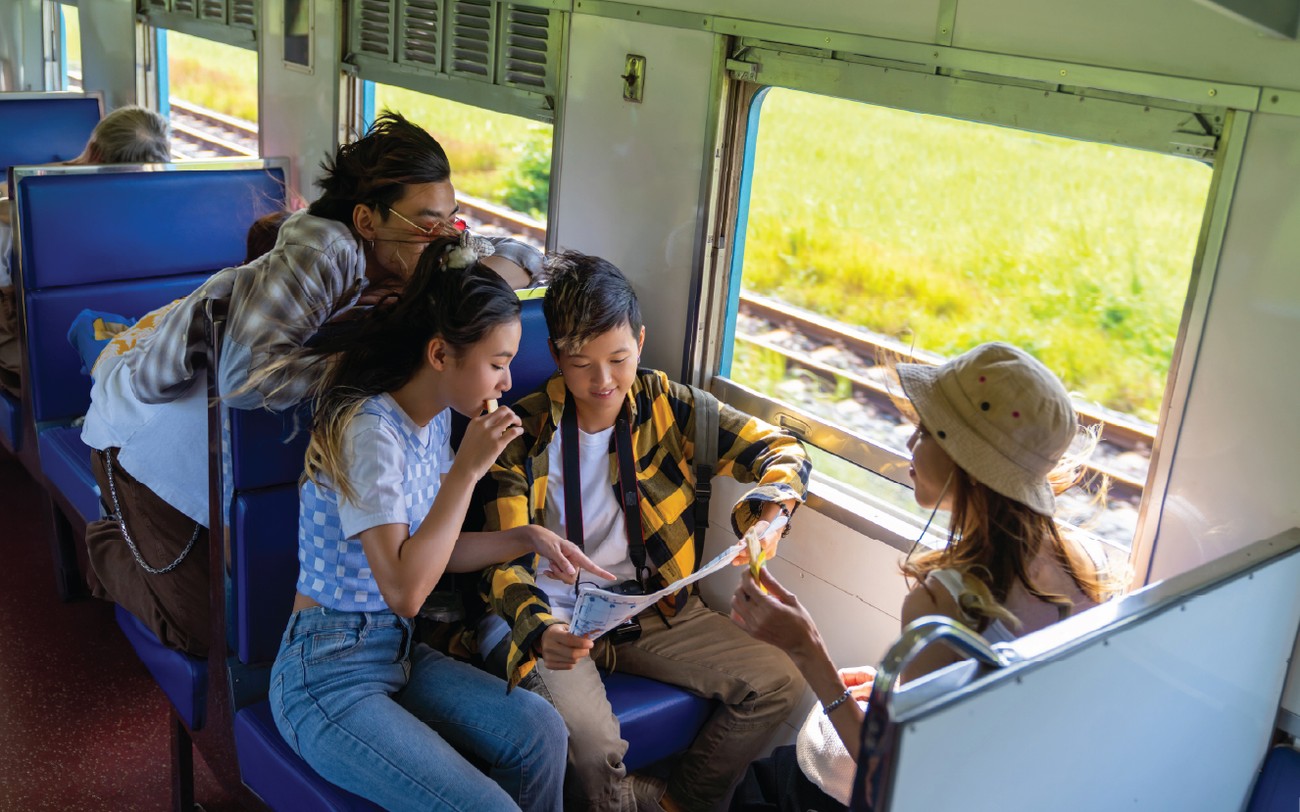
Somewhere in the last fifteen years, without any of us quite noticing, we stopped taking the long train. The eighteen-hour one. The one with the side berth you didn't want, the one where you learned three strangers' entire life stories before Nagpur, the one that turned a journey into an event rather than a gap between two more important things. The one your mother packed food for as if you were leaving for a month, with theplas wrapped in foil, a steel dabba of pickle, and a water bottle refilled at every platform tap along the way.
We fly now. Mumbai to Delhi in about two hours, Bengaluru to Kolkata in under three. It's faster, it's often cheaper if you book early, and there's a lot to be said for that. Nobody misses the waiting-list anxiety, the frantic search for your name on the reservation chart pasted outside the coach, or the overnight delay that swallowed half your holiday. But I think we quietly gave up something in the trade, and most of us haven't stopped to notice what it was.
What Flying Removed
A flight is designed to erase the journey. You board, you're handed a tray, you sleep or scroll or stare at a seatback screen, and a couple of hours later you're somewhere else entirely, having experienced almost nothing of the distance in between. That's the whole point, and a genuine achievement of modern engineering. But it also means that travel, for most of us, has become entirely about two endpoints, the place you left and the place you arrived. Everything in between has been optimised out of existence.
Think about what that in-between used to hold. The plains turning into plateau, the soil changing colour outside the window, the language on station boards shifting from one script to another, the chai changing taste from one state to the next. A train made you feel the size of this country, mile by mile. From thirty-five thousand feet, India is a carpet of clouds, and then a runway.
The long train journey worked the opposite way. The eighteen hours weren't a cost to be minimised. They were the experience. You'd board in the evening, find your berth and negotiate the shared space with your compartment-mates, deciding whose suitcase went under which seat and who would get the window first. By the time dinner was handed through the window at some midnight station, you'd have exchanged names, professions and opinions on the food with people you'd never see again. Someone's grandmother would insist you try her methi puris, and refusing was simply not an option. A pack of cards would appear from somewhere, and a game would begin that nobody quite knew the rules of.
Around 2 a.m., someone would inevitably start a conversation about cricket, politics or the right way to eat a vada pav, and the debate would carry on in whispers long after the lights were switched off. Sleep, when it finally came, came to the rocking of the coach. By morning, when the chai vendors called out at the first station of the day, you'd arrive not just at a destination but having actually lived through the getting there.
I remember journeys like this from years ago with a clarity that most of my flights simply don't have. I can't tell you a single detail about a Mumbai-Delhi flight I took last month, not the seat number, not the meal, not the face of the person beside me. I can tell you exactly who I shared a compartment with on a train to Varanasi more than a decade ago, what he did for a living, and the argument he had with the ticket collector over an upgrade. Memory, it seems, has little interest in efficiency. It holds on to the hours that asked something of us, and lets the convenient ones slip away. Ask anyone over forty about their most memorable journey, and chances are it involves a train, not a plane.
The Trains Built for This
India actually built an entire category of train around this idea, the journey as the destination, and most Indians have never taken one.
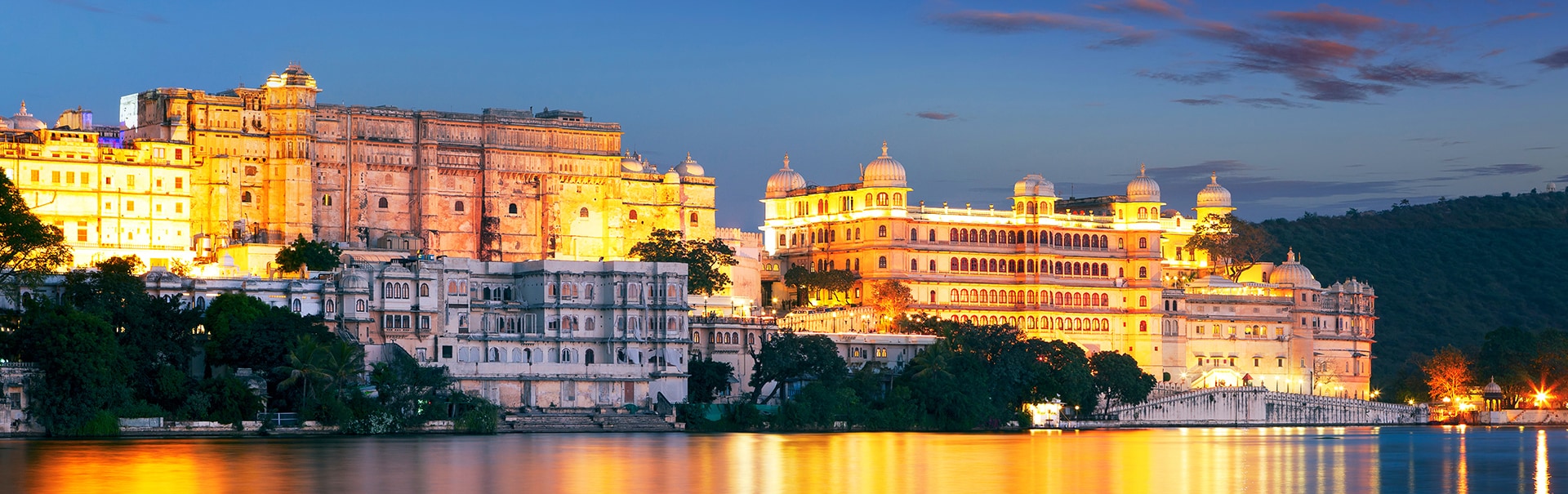
The Palace on Wheels, launched in 1982 by Rajasthan Tourism and Indian Railways, was India's first luxury heritage train, its carriages inspired by the private saloons once used by the royal families of Rajputana. The Deccan Odyssey followed in 2004 as Maharashtra's answer, with its coaches named after places in the state, hospitality originally handled by the Taj Group, and itineraries spanning Maharashtra and beyond. Both turn what would otherwise be a transit problem, getting from Jaipur to Jaisalmer to Udaipur, say, into a week-long, slow unfolding of the country, with every overnight leg treated as part of the experience rather than dead time to be slept through. You go to sleep in one landscape and wake up in another, with the desert, the forts and the lakes arriving one after another as if someone were turning the pages of a book.
These trains exist because someone understood that the romance of Indian rail travel, the open windows, the sense of a country revealing itself gradually rather than all at once, was worth preserving deliberately, even if it meant charging handsomely for what an ordinary sleeper ticket once offered for a fraction of the price. There is a quiet irony in that. What our parents took for granted is now sold as a luxury.
The Numbers Tell the Story
Meanwhile, ordinary long-distance train travel has been quietly losing ground to the skies. India's domestic air traffic has crossed 165 million passengers a year, and the government projects it will touch 300 million by 2030. It's easy to understand why. Airfares have become genuinely competitive, flights are faster, and for business travel especially, there's no real argument for the train anymore. A day saved is a day earned, after all, and few of us have days to spare.
But somewhere in that shift, an entire genre of human interaction quietly disappeared. You don't make friends on a flight. You barely make eye contact. Headphones go on before the seatbelt sign goes off, and the only conversation is with the crew about tea or coffee. The person beside you for two hours remains as much a stranger at the end as at the start. The overnight train never allowed that kind of anonymity. Eighteen hours in a shared compartment forces a kind of intimacy that no amount of legroom can replicate. You saw people tired, hungry, half-asleep and unguarded, and they saw you the same way. That is where friendships, however brief, are born.
What I'd Argue For
I'm not suggesting anyone give up flying. It would be absurd for me to argue that, running a travel company that depends on modern transport to move hundreds of thousands of guests every year. Flying is how most travel actually gets done, and there's no romanticising away the value of speed for anyone short of time.
But I'd make a case for something smaller. One long train journey a year, purely for what happens between the stations. Not a work trip you need to rush through, not a family holiday on a tight schedule, but a deliberate, unhurried journey where the eighteen hours are the point. Leave the laptop in the bag. Carry a book you've been meaning to read, and then don't read it, because the window will be more interesting.
Take the Konkan Railway down the western coast, running between the Sahyadris and the Arabian Sea, through tunnel after tunnel and across bridges over rivers that rush to meet the sea. In the monsoon, the hillsides turn an impossible green. Take an overnight train towards the hills of the Northeast, past tea gardens and paddy fields, where the track itself becomes an event. Or simply take the sleeper class train you'd normally avoid, the one your travel agent would automatically upgrade you out of, and let the eighteen hours happen to you the way they used to.
You'll almost certainly talk to a stranger you wouldn't have met any other way. You'll eat something handed through a window at a station you've never heard of and will probably never see again. You'll watch a sunrise you didn't plan for, over fields whose names you'll never know. And when you arrive, tired and slightly grimy in the way only a long train journey can make you, you'll have actually travelled the distance, rather than simply having been transported across it.
That difference, between travelling a distance and being transported across it, is worth remembering. Even if, like me, you'll be back on a flight the very next week.
Know the Unknown
Ever since we launched flight bookings on Veena World, I've been falling down rabbit holes about flights. And this week, after writing about the eighteen-hour train, I found something at the opposite extreme. Two journeys could hardly be more different, and yet each says something about the other.
The world's shortest scheduled commercial flight covers just 2.7 kilometres (1.7 miles), between the islands of Westray and Papa Westray in Scotland's Orkney archipelago. Time in the air is usually around ninety seconds, and the record, set by pilot Stuart Linklater with a favourable wind, is 53 seconds. That's less time than it takes to read this paragraph, and certainly less than it takes most of us to find our seat on a normal flight.
The flight has run since 1967, and it isn't a novelty act. It's a genuine lifeline for the roughly ninety people of Papa Westray, connecting them with the rest of Orkney without a choppy ferry crossing. Loganair flies it every day in a tiny Britten-Norman Islander, with passengers seated so close to the pilot that they can watch every switch being flicked. Tourists fly it purely for the record, and Loganair even offers them a commemorative certificate.
Here's what connects it to everything above. On the eighteen-hour train, the whole point is the hours. On this flight, the journey lasts less time than boarding usually takes. Two ends of the same idea, distance and time, pulled to their extremes. One turns a journey into a relationship. The other turns it into a formality so brief it barely counts as travel.
Tell me via email: eighteen hours on a train, or ninety seconds in the air. Which one would you actually remember?
See you next week…




 88 videos









Post your Comment
Please let us know your thoughts on this story by leaving a comment.