Published in Indian Express 22nd November 2026
The word monsoon comes from the Arabic ‘mawsim’, which simply means season. For centuries, sailors crossing the Indian Ocean treated the winds as a calendar. One set of winds carried ships east to India in summer, and the opposite set carried them home in winter. Nobody argued with it. You waited for your season, and then you sailed.
I have been thinking about that calendar because of what happens to most Indian holidays in December. Almost all of us travel in the same fortnight, for the same reasons, to the same places. And in doing so, we miss the part of the year when the world is arguably at its most interesting. After December, the crowds go home, prices ease, and a series of extraordinary things happen, all of them on a schedule that nature set long before tourism existed.
Here are six of them.
A Lake That Flows Backwards
In Cambodia, the Tonle Sap is the largest freshwater lake in Southeast Asia, and it does something almost no other lake does. For roughly half the year, the river that connects it to the Mekong flows out of the lake. When the monsoon swells the Mekong, the current reverses, and the river runs back into the lake. The lake swells from about 2,500 square kilometres in the dry season to as much as 15,000 at its peak, and the villages on its shore float up with it.
The Khmer empire grew up around this pulse. Its kings built their capital, Angkor, on the plain just north of the lake, and in the early twelfth century Suryavarman II raised Angkor Wat there, a vast temple dedicated to Lord Vishnu, later a Buddhist shrine. For an Indian traveller, it is a strange and moving experience, because the walls carry scenes from the Ramayana and the Mahabharata, carved by sculptors on the far side of the Bay of Bengal.
The cool, dry months from November to February are the best time to go, and around the March equinox, the sun rises directly over the central tower, an alignment that was built into the temple’s design nearly nine hundred years ago.
A Sea That Leaves Every Winter
In Gujarat, the geography works in reverse. During the monsoon, the Arabian Sea floods the Rann of Kutch, and the plain becomes a shallow, shimmering lake. Through the autumn, as the water recedes in autumn, evaporation leaves behind a blinding white crust of salt that stretches toward the horizon. The Rann Utsav, held at a tent city near the village of Dhordo, runs from 1st November 2026 to 7th March 2027, and the nights around the full moon, in January and February, are when the white desert glows.
Kutch holds an older story as well. In the Rann itself, at Dholavira, stand the ruins of a Harappan city about 4,500 years old, which UNESCO inscribed as a World Heritage Site in 2021. It is known for its water engineering, reservoirs and channels built to conserve every drop in a landscape that was already dry. A city that thrived in a place that lives by water, in a land that lives without it, tells you something about how people have always learned to read their geography.
The Plains That Time a Birth
In Tanzania, from late January into March, the southern Serengeti hosts one of the most precisely timed events in the natural world. The wildebeest herds arrive on the short-grass plains around Ndutu after the November rains, and then, within a window of two to three weeks, as many as half a million calves are born. At the peak, in February, estimates run as high as eight thousand births in a single day.
It is not an accident of place. The plains lie on volcanic ash soil laid down by the Ngorongoro highlands, and the short grass that grows from it is rich in the minerals nursing mothers need. The open ground also makes it harder for predators to approach unseen. And by giving birth all at once, the herd overwhelms the hunters. There are only so many calves a lion can eat, so most survive. It is a strategy refined over thousands of years, and it can be watched from a jeep on an ordinary morning.
Snow Made of Distance
In Japan, the cold of Hokkaido is a matter of geography. Frozen air sweeps down from Siberia, crosses the warmer waters of the Sea of Japan, gathers moisture, and falls on the island as snow. By February, the snow on the ground in Sapporo can reach nearly a metre.
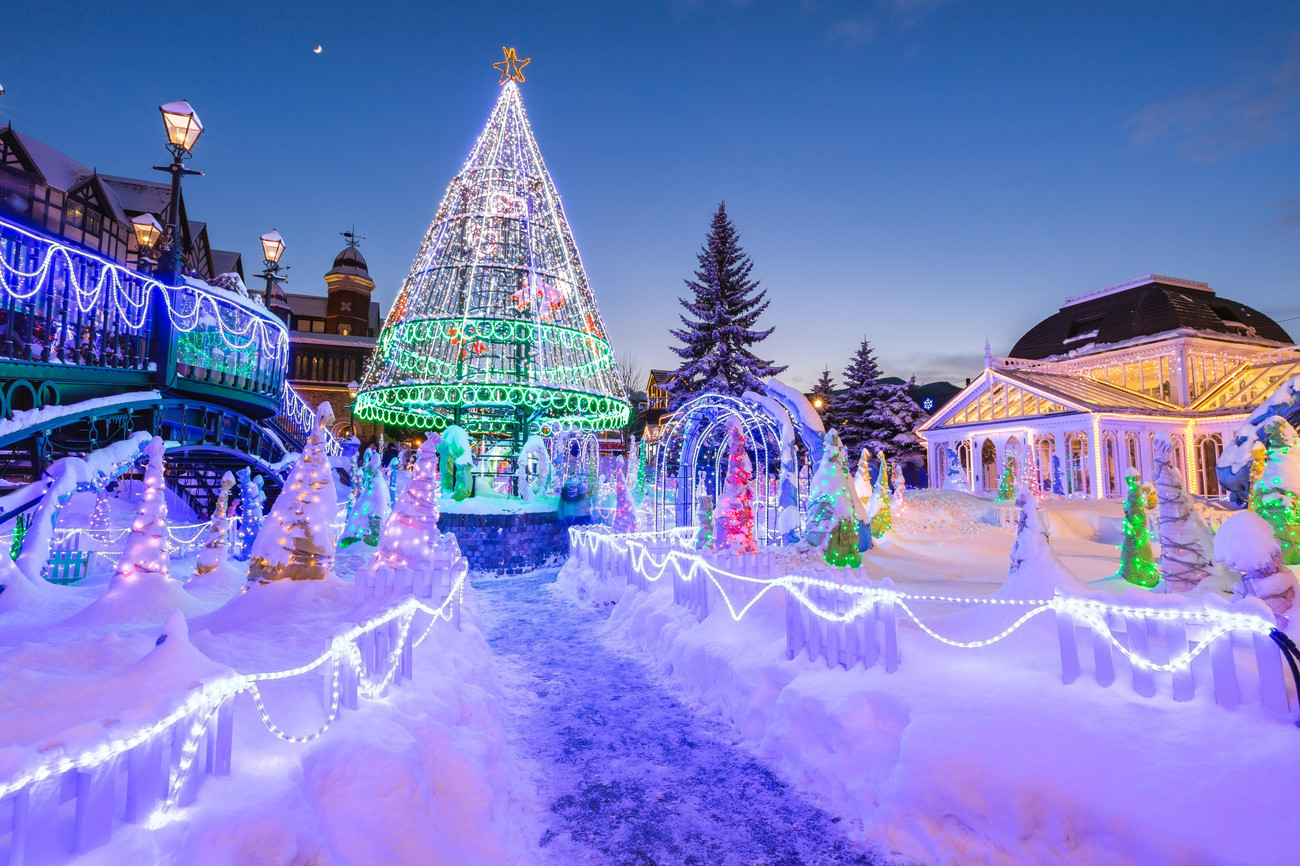
The city does something delightful with it. In 1950, a group of local students built six snow statues in Odori Park, on a patch of ground where residents had been dumping snow cleared from the streets. About fifty thousand people came to look. The Sapporo Snow Festival now draws more than two million visitors, and the 77th edition runs from 4th to 11th February 2027, with snow sculptures as tall as buildings lit up through the evening. It began with a handful of students and a pile of unwanted snow.
A City Built on a Plan, and a Festival Nobody Planned
In January, the city of Jaipur turns into a library, and it is worth knowing how unlikely that is. Jaipur was founded on 18th November 1727 by Sawai Jai Singh II, an astronomer-king who moved his capital down from the hills of Amer and laid out the new city on a precise grid, with the help of the scholar-architect Vidyadhar Bhattacharya. It is one of the earliest planned cities in India. The old town was painted pink in 1876 to welcome the Prince of Wales, the colour of hospitality in Rajput tradition, and the walled city is now a UNESCO World Heritage Site. So is Jai Singh’s observatory, the Jantar Mantar, where a stone sundial 27 metres high still tells the time.
A king who loved precision would be surprised by what happens in his city every January. The Jaipur Literature Festival began in 2006 with 18 writers and a small audience, and it is now billed as the greatest literary show on earth and the largest literature festival in the world, with past editions reportedly drawing hundreds of thousands of visitors. The 20th edition runs from 14th to 18th January 2027 at Hotel Clarks Amer. The festival’s 20th year also falls in the year Jaipur itself turns 300. January is when Rajasthan is at its kindest, cool in the mornings and golden in the afternoons, and there is no better time to wander a planned city and listen to an entirely unplanned conversation.
A City That Wears a Mask
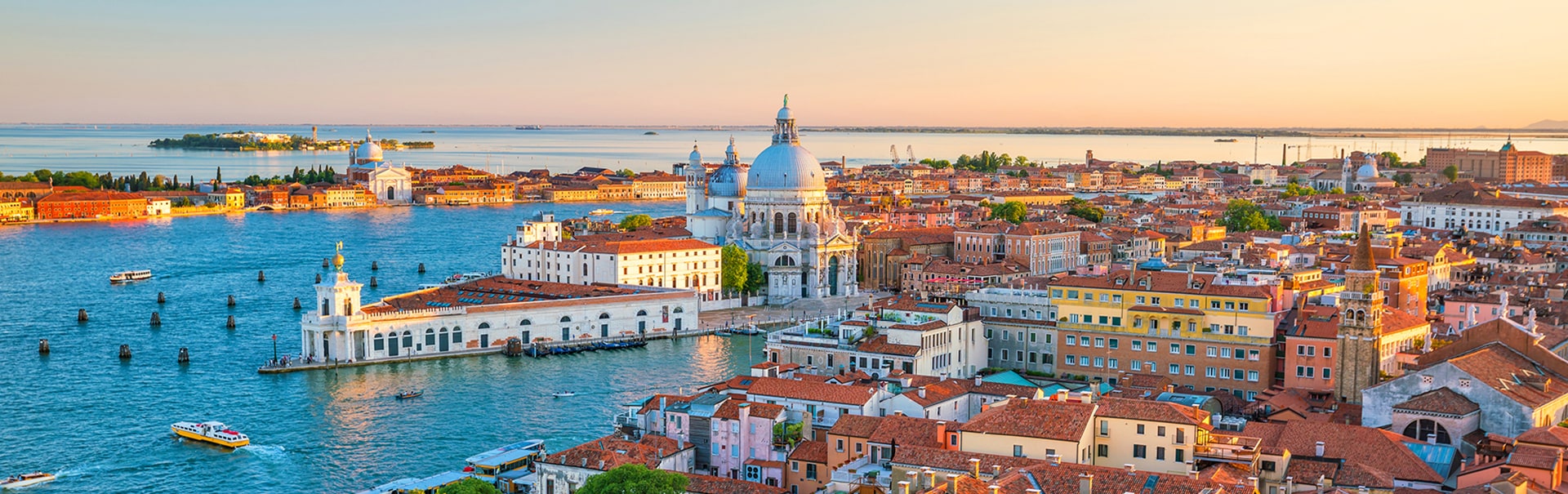
In winter, Venice changes character. The day-trippers thin out, the lagoon mist hangs over the canals, and then, in late January, the city puts on masks. Venetians trace their Carnival to 1162, when the Republic celebrated a victory over the Patriarch of Aquileia with a party in St Mark’s Square. But it was the masks, more than the party, that made it famous. In a society with some of the most rigid class divisions in Europe, a mask let nobles and commoners mingle, hiding rank behind a painted face. The word ‘Carnevale’ itself comes from the Latin for removing meat, since the festival is the last blowout before Lent.
When the Republic fell in 1797, Carnival was banned, and for almost two centuries the city was quiet. It returned in 1979, when the organisers marked the occasion by burning an effigy of Pantalone, the miserly old merchant of the commedia dell’arte, and it now draws about three million visitors a year. The 2027 Carnival ends on Shrove Tuesday, 9th February. The grand masked balls cost several hundred euros a ticket, but the streets, the costumes, and the canals are free, and the best way to experience it is to walk the city early in the morning, before the crowds, when the masked figures glide through the mist as if the Republic had never fallen.
Choosing Your After-December
What these six places share is timing. Each one is at its best because of when it is visited, and each one is a story that only makes sense in its season. It is worth being honest that not all of them are cheap. The Serengeti calving, the Sapporo festival, and Venice Carnival are themselves peak events, and their prices reflect it. But the point is that they sit outside the December rush, and they reward travellers who chose their dates because of a reason, not out of habit.
The south coast of Sri Lanka, where I am heading in December, is another example, since its dry season runs from December to April. And there are many more, from the Kerala backwaters in the dry months to the Gulf in the soft light of January.
The simplest way to choose is to start with the story and not the destination. Ask what is happening in the world in February that cannot happen at any other time, and then go and watch it. So what’s your pick from the places I mentioned, or probably the ones I missed. Write to me at [email protected], and let us get the conversation started.
Know the Unknown
Ever since we launched flight bookings on Veena World, I have been falling down rabbit holes about airlines and how they plan. And since this week’s piece began with the word for season, here is the airline calendar, which turns out to have seasons of its own.
Airlines divide the year into just two parts. The summer season runs from the last Sunday in March to the Saturday before the last Sunday in October, about seven months. The winter season runs from the last Sunday in October to the Saturday before the last Sunday in March, about five months. The dates are tied to the clock changes in Europe, and this year the winter season began on 25th October and will run until 27th March 2027.
The split is not decorative. Every timetable, and every airport slot, is filed against one of these two seasons. On the changeover day, airlines across the northern hemisphere switch to a new schedule, routes begin and end, and thousands of flights are retimed on the same day. Twice a year, more than ninety slot coordinators and over 250 airline schedulers meet at IATA’s slot conferences, one in June for the winter season and one in November for the summer season, to fit their plans around the capacity of each airport.








 92 videos




Post your Comment
Please let us know your thoughts on this story by leaving a comment.