Published in Indian Express 15th November 2026
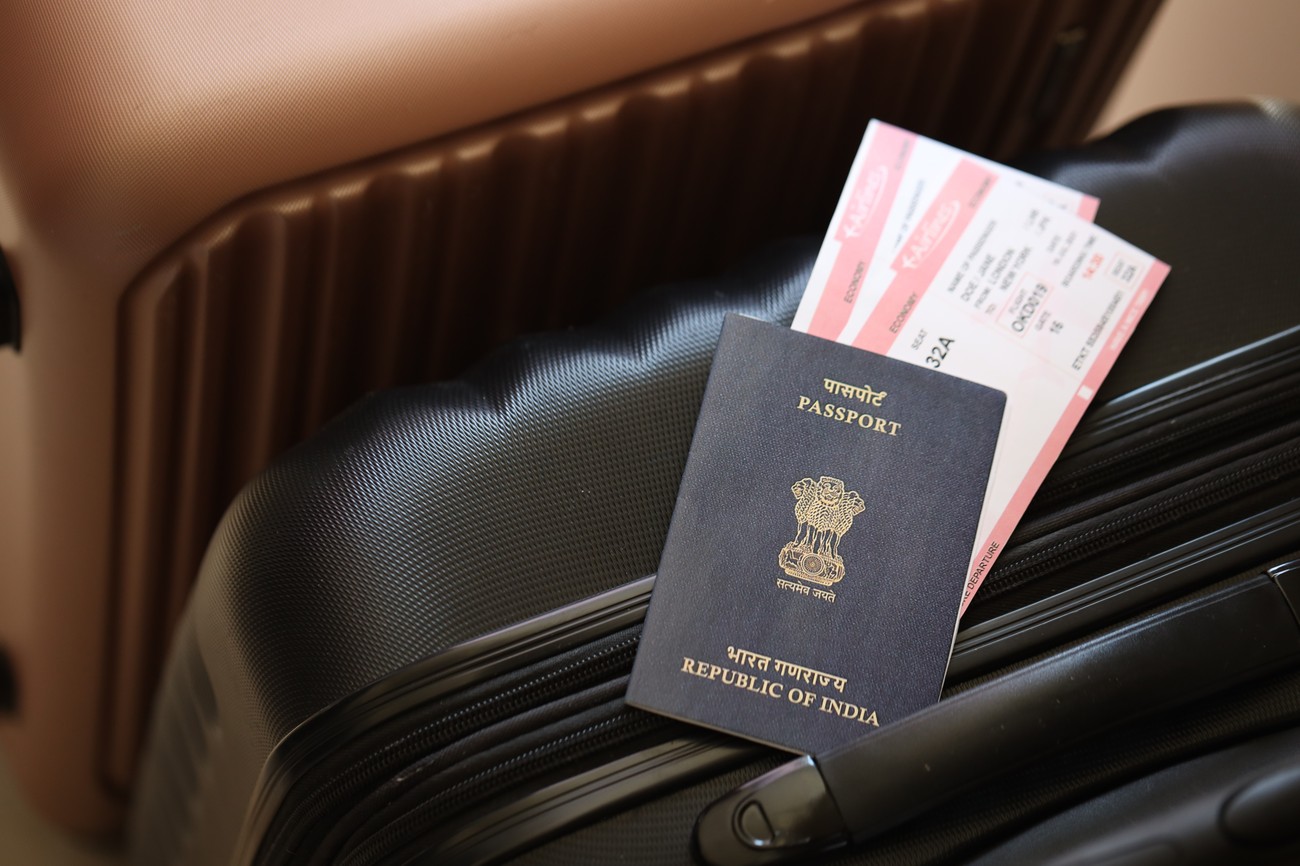
I am writing this from Singapore’s Changi Airport, with a boarding pass I can no longer use. My flight from Mumbai to Singapore was delayed, I missed my connection to Bali, and the next flight to Denpasar leaves in six hours. I wrote recently that I see a long layover as a blessing, and I am about to test that theory the hard way. There is a coffee beside me, a charger in the wall, and a departure board that keeps refreshing without ever showing my flight any sooner.
It is, at least, the right place to think about airport codes. Today, my boarding passes have said BOM, SIN and DPS, which are Mumbai, Singapore and Denpasar. SIN needs no decoding, although I will admit the three letters have never quite matched the city’s reputation for good behaviour. The list I keep of Raya and Aarav’s flights is, when you look at it closely, a long list of the same thing. BOM to UDR. BOM to GOX. BOM to HKT. IST to TIV. SJJ to IST. Each one is a pair of codes, and nobody at any of those check-in counters ever explained a single one of them.
Most of us read these codes without a second thought. They are on the bag tag, the boarding pass and the departure board, and we treat them as noise, something to match quickly before hunting for the gate number. But each one is a small piece of history, and I confess that, as a flight nerd, I find them hard to resist. A boarding pass is a tiny museum, and the codes are the exhibits.
Where the Letters Came From
Airport codes go back to the 1930s, when airlines in the United States borrowed the two-letter identifiers that the National Weather Service already used for its weather stations, the same stations pilots relied on before every flight. Los Angeles, for instance, was simply LA.
Two letters did not last. As aviation grew, there were too many airports for the number of available combinations, and during the 1940s the system moved to three letters. Rather than invent something new, many cities took their existing two-letter code and added a letter to the end. Los Angeles’s LA became LAX in 1947, Portland’s PD became PDX, and Phoenix’s PH became PHX. The X was a filler, a placeholder that was never meant to mean anything. It stuck so firmly that LAX is now a brand seen on caps and souvenirs around the world.
The International Air Transport Association, better known as IATA, later took over the job of standardising and assigning the codes, and its rules describe them as permanent. Once a code is assigned, it is almost never changed, and then only with strong justification, usually concerning air safety. India has seen this first-hand, when requests to change the code of Gaya airport in Bihar were turned down on exactly those grounds. That one rule explains most of the oddities that follow.
The Code That Remembers the City’s Old Name
Start close to home. Mumbai’s airport code is BOM because the code was handed out when the city was still called Bombay. Chennai is MAA, from Madras, because the more obvious MAD was already taken by Madrid. Kolkata is CCU, from Calcutta. Bengaluru is BLR, from Bangalore. The cities were renamed between 1995 and 2014, Bombay first and Bangalore last, and the codes stayed exactly where they were.
A recent flight we took was from Navi Mumbai to Thiruvananthapuram, coded TRV, which still spells out Trivandrum. And Pune is PNQ, a relic of Poona. Each of these is a frozen snapshot of an earlier map, a name that has disappeared from the signboards and survives only in three letters on a bag tag. I rather like that. The city moves on, the signboards move on, but the luggage still remembers.
The IX Puzzle
Look at a domestic route map and a pattern jumps out. Chandigarh is IXC. Bagdogra is IXB. Mangaluru is IXE, Leh is IXL, and Port Blair is IXZ, a code with no Z anywhere in the name. Once you start noticing them, they turn up across the country, from Madurai’s IXM to Jammu’s IXJ and Ranchi’s IXR.
The exact origin of the IX block is debated, but the most common explanation is practical. Many of these were small or military airfields with a civilian terminal attached, and India was given a block of codes starting with IX for them. Bagdogra and Chandigarh are both civil enclaves on Air Force stations to this day. On smaller regional routes, it is worth reading the airport name on your ticket rather than trusting the letters to look familiar.
Codes That Belong to a Story
Some of the best codes record a place that no longer exists. Chicago’s main airport is ORD, from Orchard Field. During the Second World War, the site was a Douglas aircraft factory building C-54 transport planes on farmland in a small community called Orchard Place, and after the war the airfield took the name Orchard Field. In 1949, the city renamed it O’Hare, after the Navy flying ace and Medal of Honor recipient Edward “Butch” O’Hare, but the code did not change, and ORD survives as the memory of an orchard.
Orlando is MCO, the code of McCoy Air Force Base, named after Colonel Michael McCoy, who was killed in the crash of a B-47 bomber in 1957. Civilian airlines began sharing the base in the 1960s, the Air Force left in 1975, and the airport became Orlando International the following year. The name changed. The code stayed.
Toronto is YYZ, and nearly every major Canadian airport code starts with a Y. The reason is a tangle of weather stations, radio beacons and railway telegraph codes, and its exact origins are still argued over. What is clear is that the Y prefix was inherited from the 1930s system, and YYZ itself comes from YZ, an old identifier for Malton, the farming community where the airport was built.
The same rule holds for the new as well as the old. Codes belong to the place and not to the building. When Istanbul’s main airport moved to a new site in 2019, the code IST moved with it, and the old Atatürk Airport was given a new one. And Goa now has two airports, Dabolim, coded GOI, and the newer one at Mopa, coded GOX.
The Four Letters the Pilots Use
There is also a second code that passengers rarely see. Air traffic controllers and pilots use four-letter ICAO codes, issued under the International Civil Aviation Organization’s system, and in India they follow a neat pattern. All Indian codes begin with V, and the second letter marks the region: A for the west, E for the east, I for the north, and O for the south. The last two letters usually abbreviate the place.
So Mumbai is VABB: V for the region, A for the west, and BB for Bombay. Chennai is VOMM, O for the south and MM for Madras. Kolkata is VECC, E for the east, and Bengaluru is VOBL. Delhi is VIDP, I for the north and DP for Delhi Palam. Even the newest airports follow the rule, and Navi Mumbai is VANM. Once you know the pattern, you can read an Indian airport almost like a postcode.
How to Read Your Own Boarding Pass
A few small habits make the codes useful as well as interesting. When a code does not match the city, think about the old name first, since that solves most of them. On smaller routes, trust the airport name on the ticket and not the letters. And check carefully when a city has more than one airport. Mumbai now has two, BOM and NMI at Navi Mumbai, and more flights are set to move between them. In late October, IndiGo and the Air India Group announced a phased shift of selected flights from BOM to NMI, beginning in December, while Mumbai’s Terminal 1 is redeveloped. So the three letters on your ticket decide where you need to go.
It takes a few seconds, and it is the sort of habit that prevents a very expensive taxi ride.
A Tiny Museum
So the next time you hold a boarding pass, look at the letters for a moment. BOM is a city that changed its name. ORD is an orchard that disappeared before the jet age. MCO is a colonel who died in a crash. LAX is a placeholder that became a brand. YYZ is a farming community that became the site of Canada’s busiest airport.
Three letters do not seem like much. But they carry more history than most of the words on the page.
Know the Unknown
Ever since we launched flight bookings on Veena World, I have been falling down rabbit holes about airports, and I happen to be sitting in one of the best of them as I write this.
Changi is not an accident. In 2025, it handled a record nearly 70 million passengers through its four terminals, and in March this year Skytrax named it the World’s Best Airport for a record 14th time. Its most famous feature began as something quite ordinary. Jewel Changi Airport was built over the open-air car park in front of Terminal 1, because the airport needed more room, and the project enlarged Terminal 1 at the same time. The brief was practical. The result, designed by the architect Moshe Safdie, who also designed Marina Bay Sands, is a glass dome with a 40-metre waterfall at its heart. The Rain Vortex is the tallest indoor waterfall in the world, and it is surrounded by a five-storey indoor forest of about 22,000 square metres.
Here is the detail that matters to a stranded transit passenger. Jewel sits landside, so a proper visit generally means clearing immigration. But Jewel was built around the existing Skytrain track, and the transit-side train between Terminals 2 and 3 runs straight through it, so passengers who stay airside can still see the Rain Vortex from the train window. The designers even placed the waterfall slightly off-centre to keep a safe distance from the track. Elsewhere, Terminal 3 has the world’s first butterfly garden inside an airport, home to more than 1,000 butterflies and a six-metre grotto waterfall, and Terminal 1 has a rooftop cactus garden.
An airport gave up its car park to build a forest, and a delayed passenger can enjoy it from a train window. As I wait for the flight to Bali, I can think of worse places to be stuck.
What do you think? Write to me at [email protected], and let us get the conversation started. See you next week…








 90 videos








Post your Comment
Please let us know your thoughts on this story by leaving a comment.