



Published in Indian Express. Date 23rd August, 2026
Two weeks ago, we talked about the India you fly over. This week, I want to shift our attention from India to something that is deeply connected to India, but sits 7,700 kilometres away, on the western edge of Europe, largely invisible to Indian travellers.
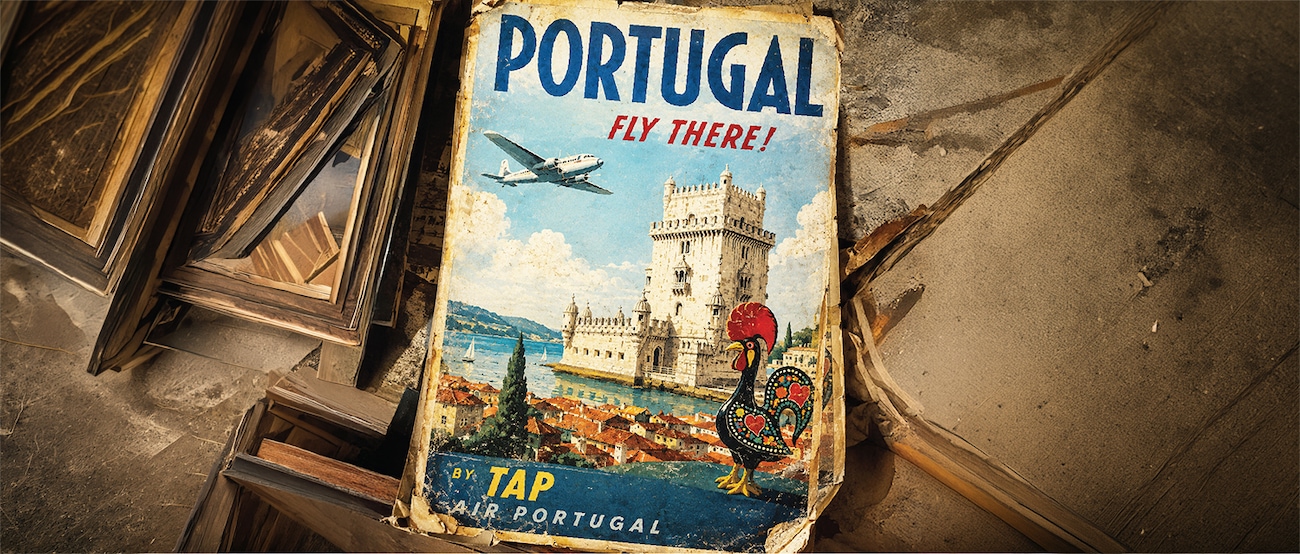
Portugal. The country that actually shaped one of India’s most beloved states for 451 years, gave us one of our most famous dishes, introduced chillies to our cuisine, built the churches that are now UNESCO World Heritage Sites in Old Goa, and then somehow ended up as the forgotten sibling of European tourism.
Indian travellers will fly to Barcelona, drive to the South of France, spend a week in the Italian countryside, and completely skip Portugal, a country that shares more cultural DNA with India than almost any other nation in Europe. And I should be honest here: I have been party to this myself. I have been to dozens of countries in Europe, I run a travel business, and I still haven’t been to Portugal. The country that built the churches I have walked through in Old Goa, that gave us the vindaloo that we often relish, that ruled a part of India for longer than the British did. And I have never been. That, I think, tells you something about how invisible Portugal has become. In spite of that, I am convinced it’s one of the great missed connections in Indian travel. Let me explain why.
You Already Know Portugal. You Just Don’t Know You Know It.
Start with what’s on our plate. The vindaloo we have in India, at home, at your favourite Goan restaurant, at the Sunday lunch that’s been a family tradition for years, is Portuguese. The word vindaloo is a Goan pronunciation of carne de vinha d’alhos, which translates to meat in wine and garlic. Portuguese sailors brought the dish to Goa in the early 16th century as a way to preserve pork during long sea voyages. Goan cooks took it, swapped the wine for palm vinegar, added the chillies that the Portuguese themselves had brought from South America, threw in tamarind and black pepper and cinnamon, and created something entirely new. But the bones of the dish, the vinegar, the garlic, the pork, are Portuguese. Every vindaloo is a 500-year-old conversation between Lisbon and Goa.
Now look at the buildings. If you have been to Old Goa, you have stood inside Portuguese architecture without necessarily thinking about where it came from. The Basilica of Bom Jesus, built in 1594, is Portuguese Baroque, the same style you will find in churches across Lisbon. The Se Cathedral, the largest church in Asia, combines Gothic and Manueline elements. Manueline is a style of architecture that exists nowhere outside Portugal and its former colonies. The azulejo tiles, those blue-and-white ceramic panels depicting saints and biblical scenes, that line the interiors of Goa’s churches are the exact same tiles that cover the facades of buildings across Lisbon and Porto. The Royal Chapel of St. Anthony in North Goa has azulejo panels dating to 1681. Walk through the Alfama district in Lisbon, and you will see the same craft, the same palette, the same storytelling technique on every other building.
Even the pasteis de nata, those flaky custard tarts that Portugal is now globally famous for, have a cousin in Goa. The bebinca, Goa’s layered coconut pudding, shares the same Portuguese obsession with eggs, sugar, and patience. Different dish, same DNA. The point is this: if you have been to Goa, you have already been to a version of Portugal. The real thing is waiting.
The Capital Nobody Expected
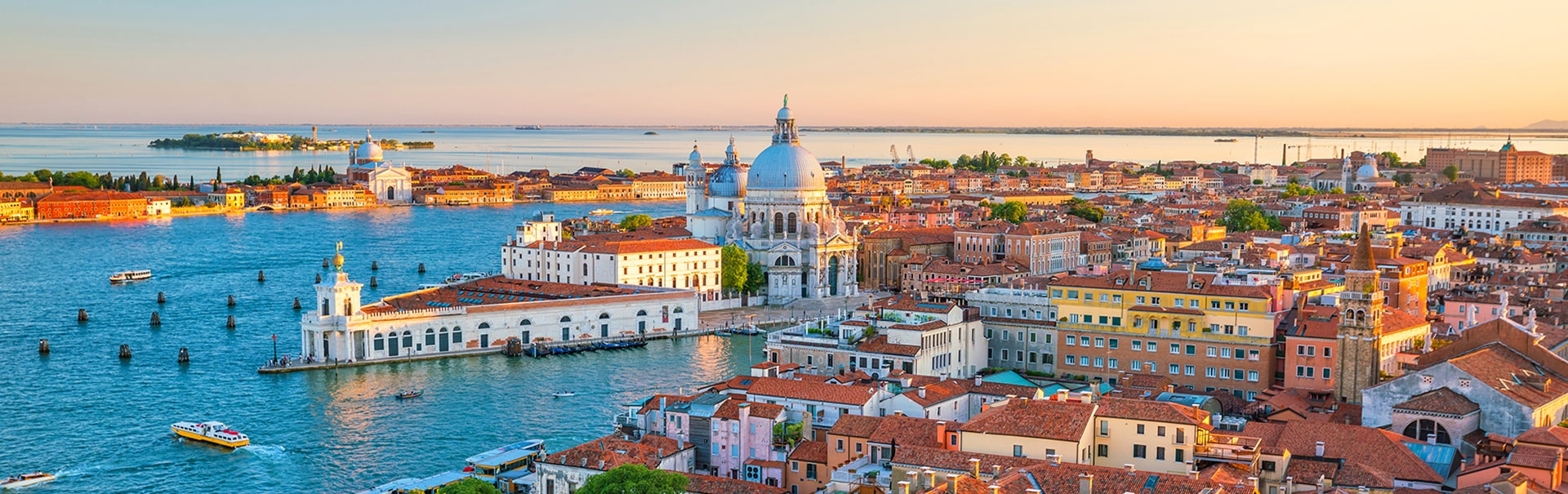
Lisbon is the most underrated capital in Western Europe. I don’t say that lightly. It sits on seven hills overlooking the Tagus River, built in layers. Moorish foundations, medieval streets, Baroque churches, Art Nouveau shopfronts, and a modern food scene that’s become one of the most exciting in Europe. The Alfama district is a maze of narrow cobblestone lanes where fado music drifts out of open doorways at night. Not the tourist-performance kind, but the real thing, sung in small bars where the singer closes their eyes and the room goes silent. Fado is to Portugal what ghazals are to Lucknow: an entire emotional vocabulary compressed into music.
Tram 28 rattles through the old city, climbing impossibly steep streets past tile-covered facades. The Belem district, six kilometres west along the river, is where Portugal’s Age of Discovery comes alive. The Belem Tower, the Jeronimos Monastery, and Pasteis de Belem, the bakery that has been making the original pasteis de nata since 1837. The tarts arrive warm, dusted with cinnamon, and cost less than two euros. There’s a reason the queue never stops.
And here’s the number that is worth noting: Lisbon is significantly cheaper than Paris, London, Rome, or Barcelona. A full meal with wine at a neighbourhood tasca costs what a starter costs in central Paris. Hotel rates are lower. Transport is cheaper. The Lisbon Metro is clean, efficient, and covers more than most tourists need.
Lisbon has everything the marquee European capitals have, the history, the architecture, the food, the nightlife, the culture, at a fraction of the price. It just hasn’t had the marketing budget.
Where the Wine Lives
If Lisbon is Portugal’s head, Porto is its heart. Portugal’s second city sits on the steep banks of the Douro River, and it’s one of the most visually dramatic cities in Europe. The Ribeira waterfront, a UNESCO World Heritage Site, is a cascade of terracotta-roofed buildings tumbling down to the river. Across the water in Vila Nova de Gaia, the port wine cellars line the opposite bank. Taylor’s, Graham’s, Sandeman, Ferreira. You can walk from one to the next, tasting wines that have been ageing in oak barrels since before you were born.
Port wine is to Porto what champagne is to Reims: it can only be called port if it comes from here. The cellar tours are extraordinary, not just for the tasting but for the scale. Vast underground warehouses stacked with barrels, some holding wines from the 1800s. A tasting of four or five ports, including a twenty-year tawny that tastes like caramel and dried apricots, costs roughly what a single glass of wine costs in a London bar.
Porto’s food scene is earthy and generous. The francesinha, a sandwich of ham, sausage, and steak, covered in melted cheese and drenched in a spicy tomato-beer sauce, is the kind of dish that sounds excessive on paper and feels absolutely necessary when it arrives. Bacalhau, salt cod, is prepared in what the Portuguese claim are 365 different ways, one for each day of the year. Whether that’s true or not, you will eat it in at least five forms during a week in Porto, and not one will taste the same.
The Livraria Lello bookshop, with its crimson staircase and stained-glass ceiling, is often called the most beautiful bookshop in the world. J.K. Rowling lived in Porto in the early 1990s, teaching English, and the rumour that Lello inspired the Hogwarts library has never been confirmed. But standing inside it, you understand why the rumour exists.
Beyond the Cities
Portugal is small. You can drive from Lisbon to Porto in three hours, and from Porto to the Algarve in five. That compactness means a ten-day trip covers an enormous range.
The Algarve, Portugal’s southern coast, has beaches that rival anything in Greece. Golden cliffs, sea caves, and water so clear it looks like the Mediterranean forgot to add salt. Sagres, at the southwestern tip, is where Prince Henry the Navigator built his navigation school and launched Portugal’s Age of Discovery. Standing on the cliffs at Sagres, looking out at the Atlantic, you are looking at the same horizon that Vasco da Gama looked at before he sailed to India. The circle closes.
Sintra, a forty-minute train ride from Lisbon, is a hilltown of fairy-tale palaces hidden in misty forest. The Pena Palace, painted in bright yellow and red, looks like something from a children’s book, except it’s real, and the views from its terraces stretch to the Atlantic.
The Douro Valley, accessible by train or boat from Porto, is one of Europe’s most beautiful wine regions. Terraced vineyards descending in green steps to the river, punctuated by white quintas where you can stay, eat, and drink wine made from grapes grown on the slope outside your window.
The India Connection
So let me end with this. Indian travellers love Europe. We spend enormous amounts of money and time visiting countries that have no connection to us beyond the fact that they are beautiful. And they are beautiful. But Portugal, a country that shaped our food, our architecture, our religion in parts of western India, a country whose explorers literally changed the course of Indian history, gets skipped.
Goa was a Portuguese territory from 1510 to 1961. That’s 451 years. Longer than the British were in India. The evidence is everywhere in Goa: in the churches, the food, the family names, the music, the civil code, the architecture. And yet most Indian travellers who love Goa have never thought to visit the country that made Goa what it is.
Portugal isn’t just another European country to add to the list. For Indian travellers, especially those from Goa or those who love Goa, it’s the other half of a story you already know. The original half. And when you walk through Lisbon’s Alfama district and see the same azulejo tiles that line the churches of Old Goa, or when you bite into a pastel de nata and taste the ancestor of every egg-based Goan sweet you have ever had, or when you hear fado for the first time and feel something familiar in its melancholy, you will understand that you didn’t discover Portugal. Portugal, in a way, had already found you.
Know the Unknown
Ever since flight bookings launched on Veena World, I've been falling down rabbit holes about airports and runways. Since we're talking Portugal this week, here's one that stopped me. Madeira's airport had a problem - mountains on one side, ocean on the other, and a 1964 runway too short for most aircraft, with no land to extend it on.
So they built over the ocean: a platform on 180 concrete pillars rising up to 70 metres from the seabed, extending the runway to 2,781 metres by 2000. For a moment on take-off, there's nothing below but ocean and columns. It's won engineering awards, ranks among the world's toughest airports to land in, and only certified pilots attempt it. In 2017, it was renamed after Madeira's most famous son: Cristiano Ronaldo.
A runway on stilts, named after a footballer, on an island belonging to the country that colonised Goa. Portugal doesn't do ordinary. See you next week…





 86 videos









Post your Comment
Please let us know your thoughts on this story by leaving a comment.