



Published in Indian Express 4th Oct 2026
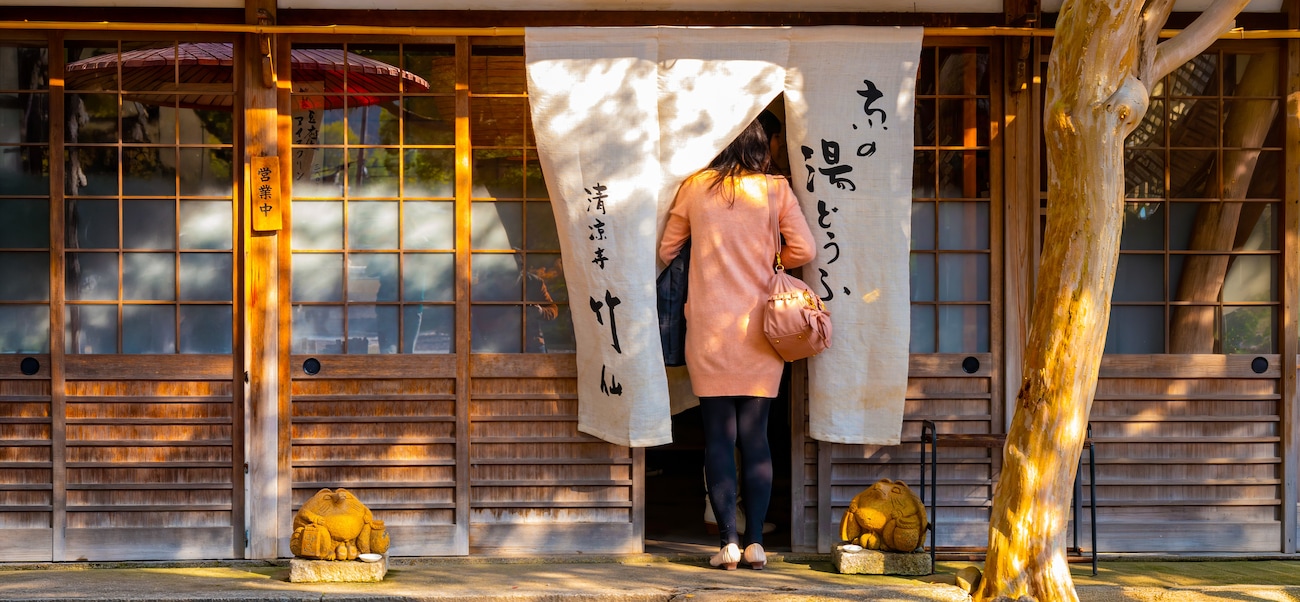
There is a version of Japan that opens up once you have already done the first trip. Tokyo, Kyoto, Osaka, the essential introduction, is exactly where every visit to this country should start, and it earns every bit of its reputation. But Japan is deep enough that a first trip was always just the opening chapter. Once you have walked Shibuya, seen the temples, and eaten your way through Osaka, there is a second Japan waiting, quieter and slower, built for people who are coming back.
I want to walk through three ways into that second Japan, the one worth planning for once the first trip is behind you. How you travel. Where you sleep. Where you actually go.
You Do Not Need to Wait for Someone
There is a word in Japanese for what happens when you sit alone at a narrow wooden counter in Tokyo, order a bowl of ramen, and simply eat it. Ohitorisama. Loosely translated, it means honourable person of one. Nobody at that counter is looking at you with pity. Dining alone is not treated as a symptom in Japan. It is a recognised, respected way of being in the world.
If you have spent the last decade or two waiting for the right travel companion to materialise, a friend with the same schedule, a partner with the same appetite for long days and unfamiliar food, you already know how that waiting feels. It quietly becomes a reason to postpone things you actually want. Japan is the country that finally gives you permission to stop waiting, not because it is trying to be inspirational, but because it has built an entire culture around the idea that doing things alone is a perfectly reasonable, even a good, way to live.
Ohitorisama is mainstream enough to have spawned an entire service economy. Solo karaoke booths are designed for one. Restaurants advertise counter seats as a feature rather than an afterthought. Onsen towns offer solo ryokan packages. Walk into almost any ramen bar or sushi restaurant in Tokyo and the counter seating is arranged with deliberate attention, the chef two feet away, the meal given a rhythm that a table for two would actually interrupt. You are not eating alone in spite of the design. You are eating alone because of it.
There is also a fear worth naming honestly, the fear that travelling alone will make you look sad or diminished in the eyes of people back home. That fear is real. But this is the wrong country to carry it into. Japan consistently ranks among the safest countries in the world on the Global Peace Index, and solo female travellers in particular describe it as transformative, a place where walking alone at midnight in a city of nine million people produces no anxiety whatsoever. Being alone in public here is read as a preference, not a problem.
Japan also makes the practical side easy. The Shinkansen and urban rail networks are signed in English throughout, and the IC cards, Suica and Pasmo, are loaded with cash at any airport kiosk and tapped at every turnstile in the country, removing the language barrier from transit almost entirely. Google Maps works on Japanese transit with a precision that will surprise you, down to the exact platform and carriage. And the konbini, the 7-Elevens, FamilyMarts, and Lawsons on what feels like every third corner, are where you go to reset when you are tired or disoriented, stocked with hot food, foreign-card ATMs, and more varieties of rice ball than you will manage to try in a fortnight.
Sleep Somewhere That Is Not a Hotel
Today, let me tell you about a version of Japan most of those visitors never get close to, and it costs about the price of a mid-range hotel room. It is called a minshuku, and if you have spent time in Japan without staying in one, you have missed something significant.
A minshuku is a family-run guesthouse, a Japanese equivalent of a bed and breakfast, except the family running it also lives there and probably grew up in the same building. It should not be confused with a ryokan, the full luxury version with formal service and elaborate kaiseki dinners. A minshuku is simply someone’s house. The room is small, the floor is tatami, the futon comes out of a closet each evening, and the bathing is shared, a small family-style ofuro (a traditional Japanese soaking bath) you queue for alongside two or three other guests. There is no menu and no room service, and it typically runs five to ten thousand yen a night with dinner and breakfast included, roughly 4000 to 7000 Indian Rupees, all in.
The food is genuinely the main event. Stay in a mountain minshuku in Nagano and dinner is foraged mountain vegetables, river fish, and handmade soba noodles. Stay on the coast of the Noto Peninsula and it is whatever came off the fishing boats that morning. Meals are often eaten in a shared dining area, sometimes alongside the family themselves, fumbling through a translation app to ask how the soup was made while someone’s husband makes a joke you do not fully understand and everyone laughs anyway. No hotel can engineer that.
Japan’s rural population is shrinking fast, and the people running these guesthouses are often in their sixties or seventies with no children interested in taking over. When they retire, the guesthouse closes. This is not meant as a guilt trip, just context. The Japan that exists in these small family operations is genuinely not going to be around forever, and staying in one is a way of experiencing it while it still is.
Add Three Cities to Your Next Trip
Tokyo, Kyoto, and Osaka remain the right place to fall in love with Japan, and there is nothing to apologise for in wanting to see Fushimi Inari's torii gates or wander Gion at least once. But precisely because these cities have become so popular, with Japan crossing 36 million international visitors in 2024, they have had to introduce measures like barriers at Fushimi Inari and no-photography zones in Gion just to manage the crowds respectfully. That popularity is a sign the first trip worked exactly as intended. For a second trip, three other Japanese cities offer something wonderfully different, the feeling of being somewhere without any of it being performed for tourists.
Kanazawa, on the Sea of Japan coast, may be Japan’s most underrated city, and it is not close. Kenroku-en, one of Japan’s three officially designated great gardens, still feels like a garden rather than a photographic backdrop. Nagamachi, the former samurai quarter, is a maze of narrow lanes you can often have almost entirely to yourself on a weekday morning. The city produces around 98 per cent of Japan’s gold leaf, and between November and March its Omicho Market serves some of the best snow crab in the country without Tokyo or Osaka prices attached.
Matsumoto, in Nagano Prefecture, is built around one of Japan’s few original, unreconstructed castles, jet black and set against the Japanese Alps. What makes it work as a destination is that it is a real working city, with coffee shops, jazz bars, and craft sake producers that cater to local residents rather than tourists. It is also the best base for the Alps, with Kamikochi, a protected alpine valley closed to private cars, less than an hour away.
Takayama, tucked into the mountains of Gifu Prefecture, is the most architecturally dramatic of the three. Its Sanmachi Suji district is a stretch of genuinely original Edo-era merchant townhouses, not reconstructions, and its daily morning markets sell produce and handmade crafts to locals who happen to be visible to tourists rather than performing for them. Shirakawa-go, the UNESCO-listed thatched-roof village, is fifty minutes away by bus and worth the half day.
These three cities connect into a logical seven day circuit, two nights each with a night in Tokyo on either end, linked by pleasant limited express trains through mountain scenery. Accommodation across all three is noticeably cheaper than Tokyo or Kyoto, and shoulder season, late October through November or March before spring holidays, gives the best combination of weather, lower domestic crowds, and reasonable prices.
The Second Trip Rule, Applied to Japan
Travelling alone, sleeping in a stranger's home, and adding a city nobody has mentioned to you before are really the same instinct wearing different clothes. Each one rewards someone who has already done the essential version of Japan and is ready for a slower, less curated one. None of this is a replacement for Tokyo and Kyoto. It is what you graduate to once you love them enough to come back.
Japan has always had enough depth to reward a second visit more than the first. The essential route gets you in the door and makes you fall in love with the country. Everything in this piece is simply what is waiting for you the next time you go back.
Know the Unknown
Ever since we launched flight bookings on Veena World, I have been falling down rabbit holes about airports. And Narita Airport in Tokyo, of all places, holds one of the strangest stories in aviation.
When the Japanese government chose the site for Tokyo’s main international airport in 1966, it picked farmland, largely without consulting the families who had farmed it for generations. The farmers refused to leave. What followed was one of the longest, most bitter land disputes in modern Japanese history, decades of protests, standoffs, and legal battles, so intense that the airport opened in 1978 with riot police stationed at the perimeter and every passenger required to show identification just to enter the terminal, a rule that stayed in place until 2015.
A handful of farmers never left. One of them, Takao Shito, still farms a small plot of land that sits inside the airport boundary today, his fields reachable only through a tunnel that runs underneath the runway. His refusal to sell forced Narita to permanently alter its design. The airport’s second runway had to be shortened, and the taxiway curves visibly around his land to this day, a small green patch of carrots and radishes surrounded on every side by one of the busiest airports on earth.
Every year, tens of crores of passengers land at Narita a few hundred metres from a working vegetable farm that the airport was never able to buy. It is, as far as I know, the only major international airport in the world with an active farm inside its own perimeter, still there because one family refused to give up their land. See you next week…






 84 videos











Post your Comment
Please let us know your thoughts on this story by leaving a comment.