



Published in Indian Express. Date 28th June, 2026
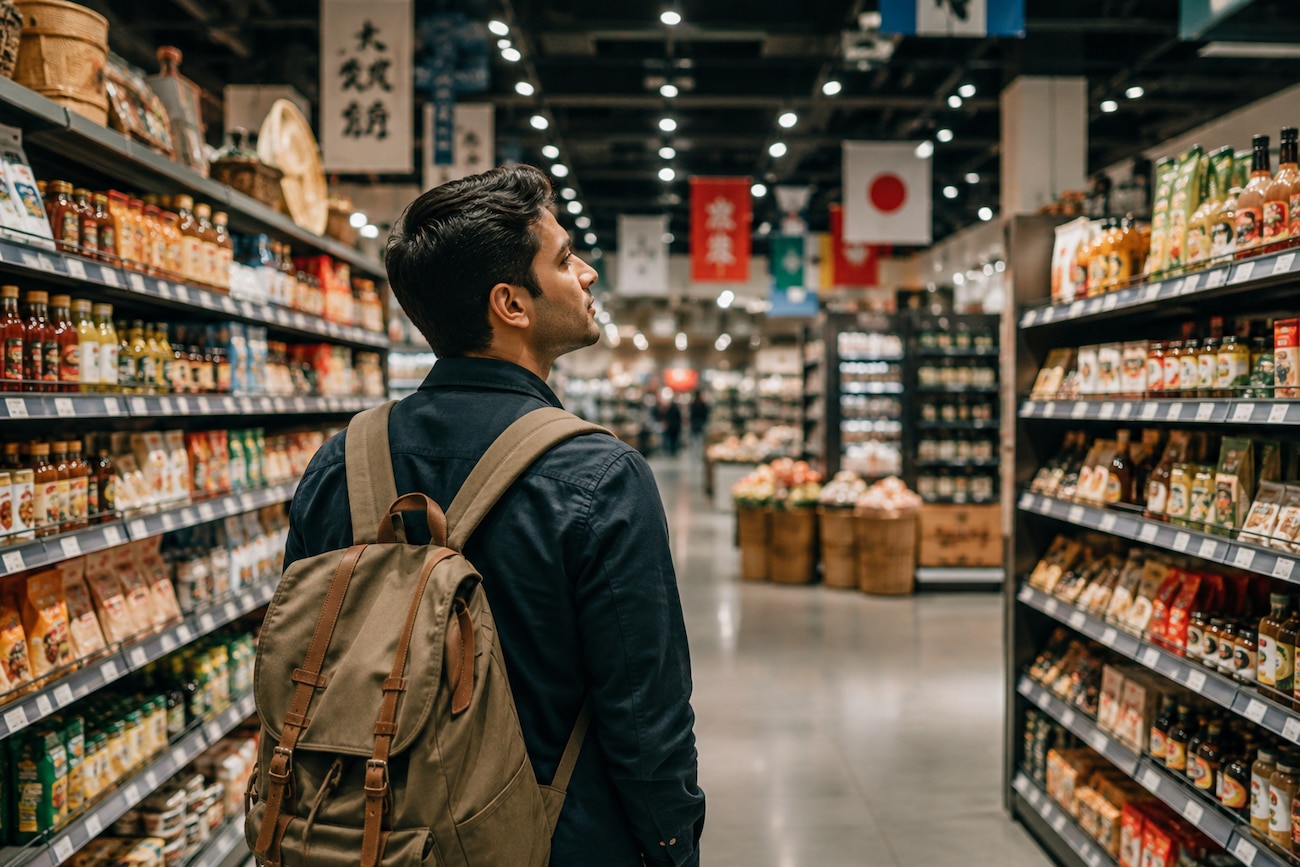
Every time I land in a new country, before the sightseeing, before the landmark photos, sometimes even before checking into the hotel, I find the nearest grocery store. Mainly because I have learned, over years of travel, that you can understand more about a country in 30 minutes inside its supermarket than in three hours at its most famous monument.
I'm not sure when this habit started. It might have been in Japan, staring at a convenience store shelf that looked like a museum exhibit. Or maybe it was in Turkey, watching a shopkeeper weigh out dried apricots with the kind of care you would expect at a jeweller. But somewhere along the way, I stopped treating supermarkets as functional stops and started treating them as the most unfiltered cultural experience a destination has to offer. And here's the thing: apparently, the rest of the world has caught up.
The Trend That Nobody Saw Coming
In 2026, Hilton published a research report that found 77 per cent of travellers worldwide already visit local grocery stores as part of their travel experience. Not as an errand. As a deliberate activity. Skyscanner's India-specific data showed that 36 per cent of Indian travellers want to explore local supermarkets on their next international trip. The European Union even coined a term for it: ‘Supermarket Safaris.’ It sounds almost absurd when you first hear it. Are people skipping museums to walk through grocery aisles? But the more you think about it, the more it makes sense. Because what a supermarket stocks, how it's priced, how it's arranged, what's fresh and what's frozen, all of it tells you a story that no guidebook, no monument plaque, and no guided tour will ever tell you. So today, let me take you on a trip. A trip that I call ‘The Supermarket Safari’.
The Kitchen Is Still Alive
Walk into a market in the Turkish city of Istanbul, or a supermarket in Antalya and the first thing that hits you is scale. The spice aisle alone is the size of an Indian kirana store. Sumac, za'atar, Aleppo pepper, dried mint, mahlab. Spices that most of the world treats as exotic are everyday staples here. Dried fruits and nuts are sold loose, by weight, in quantities that suggest people actually cook with them daily. Olive oil isn't stocked in a speciality section. It's next to the cooking oil, in litre-sized bottles, because here it's not a finishing touch, it's a foundation, the way ghee is for us. Pomegranate molasses sits between the vinegar and the lemon juice as if it belongs there, which it does.
What the Turkish grocery shelf tells you is something that's slowly disappearing in much of the world; the kitchen here is still alive. Food culture hasn't been outsourced to delivery apps and ready-made meals. People still buy ingredients, not products.
Beauty Between the Ramen and the Rice
You walk into a South Korean grocery store expecting food. You find an entire skincare section, sheet masks, serums, cleansing oils, snail mucin, wedged between the instant ramen and the rice cakes. The crossover between food and beauty is a reflection of something deeper here.
Ginseng is a snack, a tea, and a face cream. Red bean is a dessert filling and a skincare ingredient. The boundary between what you consume and what you apply simply doesn't exist the way it does elsewhere. Wellness in Korea isn't a section in the store. It's the entire store. No museum exhibit on Korean culture will show you this as clearly as five minutes in a grocery aisle in Seoul.
Groceries are a Ceremony
Walk into a Monoprix or a Carrefour in Paris at 7 AM and the baguette shelf is already half-empty. The cheese counter has 40-plus varieties, and the person behind it will ask what you are pairing it with before recommending one. The wine aisle is longer than most Indian grocery stores in their entirety.
And here's what's striking. In France, nobody does a ‘weekly shop.’ They buy for today. Maybe tonight. The entire store is designed around the assumption that you will be back tomorrow. There are no bulk packs, no family-sized anything. Freshness is a daily rhythm here. The shelf tells you: food in France is not a task. It's a ritual. And the supermarket is designed around that rhythm in a way that feels almost intimate once you notice it.
The Scale of Everything
Nothing prepares you for an American supermarket. The cereal aisle is 30 feet long. Milk comes in gallons. A single rotisserie chicken at Costco costs less than a cup of coffee at the airport. Portion sizes that would comfortably feed a family of four back home are labelled ‘single serving.’
It's overwhelming at first. But once you adjust, you start seeing the logic, or at least the cultural story behind it. America's relationship with abundance is baked into the design. Bigger is better. More is more. Value is measured in volume, not quality. The grocery store in America reflects how they think about choice, value, and excess. You learn more about the American economy walking through a Walmart than you would reading a hundred op-eds.
The Andes on the Shelf
Peru’s supermarkets surprised me the most. Coca leaves are sold as casually as tulsi. Quinoa in bulk bins, not in premium health-food packaging, because here it's not a superfood trend, it's just food. Purple corn juice, chicha morada, in the beverage aisle next to Coca-Cola. Freeze-dried potatoes, called chuño, preserved using techniques that Andean communities have practised for centuries, sitting on a shelf in a modern supermarket as if no time has passed.
The geography of Peru, the altitude, the climate, the soil, is still the main character in what people eat. The Andes aren't just a backdrop for photos. They are on the shelf, in every product, shaping what's available and how it's consumed.
Where Convenience Is a Craft
I have said this a hundred times already about Japan. Start at a konbini, a Japanese convenience store. 7-Eleven, Lawson, FamilyMart - take your pick. The first thing you notice is the onigiri. Each rice triangle is wrapped in a packaging system so precisely engineered that the nori stays dry and crisp until the exact moment you pull the tab. It's a ₹100 snack wrapped like a piece of technology.
Then you see the bento boxes. Grilled fish, pickled vegetables, perfectly portioned rice, restaurant-quality meals for the equivalent of ₹300. There are on-site microwaves if you want to heat them. There are recycling stations sorted into five categories. There's a hot coffee machine that asks how much milk you would like before it pours.
Convenience, in Japan, is a philosophy. The care that goes into a ₹100 triangle of rice and seaweed would put most sit-down restaurants elsewhere to shame. You won't learn this at a temple in Kyoto. But you will learn it in 10 minutes at a Lawson.
Immigration in the Aisles
In Australia, Vegemite gets all the attention. But walk deeper into a Woolworths in Sydney or Melbourne and you will find a shelf that tells a far bigger story. Tim Tams next to laksa paste next to Japanese curry blocks next to Indian mango chutney. Wonton wrappers next to sourdough. Kangaroo mince next to halal lamb.
The shelf isn't confused. It's a mirror. Australia is a country built by immigration. Wave after wave, decade after decade. And nowhere is that more visible than in what its supermarkets stock. A single aisle in Woolworths carries the food identity of a dozen countries, sitting side by side without explanation, because no explanation is needed. That's just what Australia is.
India - Flip the Lens
Now flip it. What would a foreign traveller learn about us from walking into our stores?
The first thing they would notice is that India doesn't have one grocery shelf. It has dozens. And each one tells a story as distinct as any country on this list.
Maharashtra: The farsan shelf. Chivda, chakli, shev, branded and loose, side by side. Kokum syrup and sol kadhi mixes that wouldn't exist two states away. Aamras pulp in tetra packs, stocked seasonally like it's a limited-edition luxury, which, honestly, it is.
Gujarat: Jaggery in varieties you didn't know existed. Khakhra in 15 flavours. The sheer square footage dedicated to snacks because the Gujarati palate treats snacking as its own food group, and the shelf respects that.
Kerala: Coconut oil in quantities that would confuse anyone from the North. Banana chips in every variant imaginable: sweet, salt, masala, jaggery-coated. Appam and puttu batter in the chilled section, ready-made, because mornings here run on rice batter and coconut milk.
Punjab: The atta shelf with 20-plus brands, because in this part of India, the roti is an identity. Ghee in large tin containers meant for daily use, not special occasions. The pickle section, mango, lime, garlic, mixed, each in three regional styles.
Tamil Nadu and Andhra: The chilli section tells you everything. Guntur, Byadgi, Kashmiri, sorted by heat and purpose, not lumped into one ‘red chilli’ bin. Filter coffee powder sold by roast profile. Ready-to-eat formats dominated by rice: idli batter, dosa batter, murukku.
Northeast India: Bamboo shoot in jars. Fermented soybean, akhuni, sitting on a shelf next to regular dal. Smoked meat products. A grocery aisle that would feel genuinely foreign to someone from Mumbai or Delhi. And that's precisely the point.
A D-Mart in Pune and a local store in Imphal are separated by more than just distance. They are separated by entirely different food cultures sharing the same passport.
What the Shelf Knows
So now that we have walked through Japan and Turkey, France and Peru, Korea and America, Australia and six different versions of India, let me dwell on something that ties all of this together.
Monuments show you a country's curated past. What it chose to preserve, what it decided was worth freezing in time. A supermarket shows you the unedited present. The version of the country that nobody planned for tourists to see.
Pricing tells you about the lived economy, the one that decides whether a family reaches for olive oil or sunflower oil. Packaging tells you about design sensibility. The minimalism of a Japanese wrapper, the riot of colour on an Indian snack packet. What's fresh versus what's frozen tells you whether a culture shops for today or for the week. And the aisle a store gives the most space to tells you what that society values most. In America, it's cereal. In France, it's cheese. In India, it changes every 500 kilometres.
None of this requires a guidebook, an entry ticket, or a queue. Just 30 minutes and open eyes.
So here's my suggestion. Next time you land anywhere, Narita or Istanbul, Sydney or Lima, or even a city in India you haven't visited before, find the nearest grocery store before you find the nearest landmark. Walk every aisle and just look. The lves will tell you what it is.
And if you do try it, write to me. What's the most surprising thing you have ever found on a supermarket shelf, at home or abroad? I have a feeling the answers will be as varied and fascinating as the shelves themselves. See you next week!






 86 videos





















Post your Comment
Please let us know your thoughts on this story by leaving a comment.