


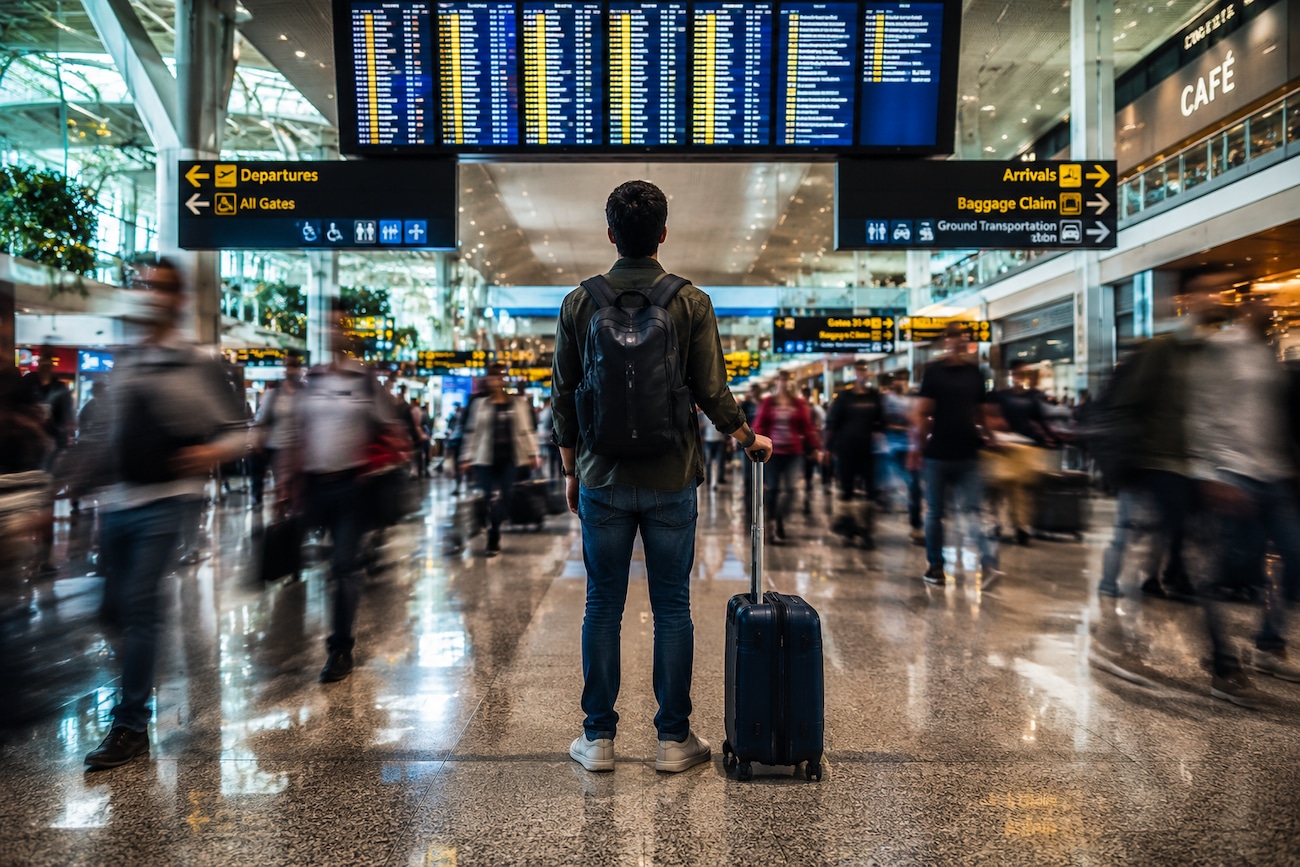

Published in Indian Express. 17th May, 2026
Yes, that is the question today. ‘How Early Do You Reach the Airport?’ It sounds like a logistical question. A practical one. But the more trips I have made to the airport, the more I have realised it's actually a question about personality, risk, and what you believe travel is really for. When it comes to Heta and me, we sit on completely opposite ends of this spectrum.
Over the last ten years, I have been consciously documenting my own flying journey, and if the numbers mean anything, I have now taken over 275 flights, passed through 69 airports, and flown with 35 different airlines. In all that time, I have missed exactly two flights. Both were caused by rare chains of events that no amount of planning could have solved.
I have always believed that flying isn't just about taking you from point A to point B. Rather, we must all think of it as an experience. I like arriving with time to spare, observing how different airports function, noticing the small differences between aircraft types, watching the system work. There is a particular kind of calm in knowing you are in control of your journey from the very moment you leave home. Travel with Heta, and it's an entirely different story.
Heta plans her airport arrival with surgical precision. If the flight departs at 10 AM, she will aim for 9 AM. Not 8:55, not 9:10, exactly 9:00. And what follows is a sprint. From entrance to security to boarding gate, every minute is accounted for, every second has a purpose. And somehow, most of the time, she pulls it off.
For Heta, her time is her most valuable asset - so killing an extra 15 minutes at the airport when she could be finishing off something else feels like a genuine waste. The airport, for her, is not part of the journey - it’s just an obstacle course she needs to go through to make it to the other side. It is an obstacle between home and the destination. You get through it as efficiently as possible, and you move on. There's a logic to it that I respect, even if I don't share it.
Watching the two of us travel together, I have often wondered: who is actually doing it right? The answer, I have come to believe, depends entirely on which part of the journey you're talking about. Because flying isn't really a single experience. It's four distinct phases, and one decision, made hours before you even see the airport, quietly shapes every one of them.
Four Phases - One Decision
The first phase, the one we almost never talk about, is the journey to the airport itself. Most people think airport stress begins at security. It doesn't. It begins the moment you step out of your house. This is where the illusion of control kicks in. You check Google Maps, see a comfortable ETA, and feel reassured. Then reality intervenes. Your driver takes a wrong turn. Traffic builds suddenly at a junction that was clear five minutes ago. And slowly, one minute at a time, your buffer begins to disappear. What was once a calm departure becomes a mental countdown: Will I make it before check-in closes? What if the gate shuts early?
The second phase is the airport itself, where your timing starts to affect everyone around you, not just you. We have all seen the familiar characters at security: the one who doesn't believe in queues, the one who is late and needs to urgently skip the line, the one aggressively pushing trays forward. If you are running late, there is a real chance you become one of them, whether you intend to or not. Every traveller who arrives rushed adds pressure to a system that is already stretched. Arrive early, and the exact same airport feels completely different. You are calmer, more patient, less reactive. Same terminal, entirely different experience.
The third phase is the flight itself, where the consequences of earlier decisions quietly show up. You board late and the overhead bins are full. Your bag goes ten rows behind you. Or worse, Heta's personal nightmare, you are asked to check in your cabin bag at the gate.
All that careful packing, undone in a moment. None of these individually is a catastrophe. But together, they shape how you feel for the next two, four, eight hours in the air.
And the fourth phase, post-landing, is where lingering frustrations tend to surface. If your bag was last-minute gate-checked, you wait longer at baggage claim with a slightly higher chance of something going wrong. If you boarded already stressed, immigration queues feel longer, coordination outside the airport feels more frustrating, and something as simple as finding your cab becomes the final test of your patience on an already draining day.
What Your Airport Behaviour Says About You
The Optimiser, like Heta, hates idle time. Every extra minute at the airport feels like a minute wasted. The goal is perfect timing: arrive just as check-in opens, skip baggage wherever possible, move fast, think fast, act fast. When it works, it is incredibly efficient. When it doesn't, it becomes a full sprint across the terminal, with stress levels to match. High efficiency, very low buffer.
Then there is what I would call the Experience Seeker, which is where I fall. For this type, flying isn't purely transportation, it is an event. Arriving early isn't wasted time; it's part of the journey. There is a quiet pleasure in watching the system work, in not being rushed, in feeling in control before the controlled chaos of boarding begins. Lower efficiency, higher enjoyment.
You also have the Budget Traveller, whose decisions are driven entirely by value. The cheapest flight no matter the hour, tight connections to save money, timelines pushed to maximise cost savings. And then the Buffer Builder, the traveller who always plays it safe, who arrives early, prefers long layovers, and will sit happily at the gate long before boarding starts, completely at ease.
The honest answer to "who is right?" is: all of them, and none of them. Because there isn't a universally correct way to approach airport timing. But there is a smarter way to think about it.
Buffers, Not Times
Here is the shift that changed how I travel. The smartest travellers I have met don't think in terms of time. They think in terms of buffers. And once you make that mental switch, something changes. You stop asking "Should I reach two hours early?" and start asking better questions: What's my travel buffer today? How unpredictable is this airport likely to be? How much stress am I actually willing to tolerate?
I now think about every flight in three layers. The first is the travel buffer, getting to the airport. This is the most underestimated one. Most of us treat Google Maps as ground truth. But in Mumbai, Delhi, Bengaluru, in any major Indian city, really, traffic is a variable, not a constant. I follow one simple rule: take the Google Maps time and multiply it by 1.5 (2x if it is Bengaluru). If it says 60 minutes, I plan for 90. If it says 40, I plan for 60. This single habit absorbs wrong turns, sudden congestion, driver-side delays, and most importantly, it protects your state of mind before you have even reached the airport.
The second is the process buffer, the airport itself. Once you are inside, you are inside a system you don't control. Entry queues, check-in counters, security checks, boarding gates, on a good day, you are through in 15 minutes. On a bad day, the exact same process can take an hour.
Tools like DigiYatra, priority check-in, or travelling cabin-only (without check-in luggage) can reduce this time, but they don't eliminate the variability. Airports don't run on your schedule. They run on peak loads. Your job is simply to give yourself enough margin to handle what you can't predict.
The third, and the most overlooked, is the personal buffer. This one has nothing to do with airports. It has everything to do with you. Do you get stressed easily when things run late? Do you enjoy the airport, or do you find it draining? Are you comfortable taking small risks to save time, or does the possibility of something going wrong keeps you up at night?
Heta operates with a very low personal buffer, she's comfortable cutting it close, and she's wired for it. I operate with a much higher one. I would rather have 30 extra minutes of calm than five minutes of stress. Neither is wrong. But knowing which type you are is the starting point for planning any journey well.
If you want a practical rule that works across the board: for domestic flights, aim for 2 to 2.5 hours before departure. For international, aim for 3 to 3.5 hours. And then add one final layer on top of both, 30 minutes for peace of mind. It costs you nothing, and it changes the experience entirely.
The Choice That's Already Been Made
Think back to your last flight. Was it calm, or was it chaotic? Did it feel like the start of something good, or did you board already drained? Because more often than not, the tone of that entire journey was set well before you reached the airport. It was set by one quiet decision, when you left home.
Flying, when you think about it, is genuinely extraordinary. We travel at 37,000 feet, crossing cities and countries and coastlines in a matter of hours. The experience should feel as remarkable as the technology that makes it possible. And yet so often, we begin that journey already stressed, already running, already slightly defeated. A lot of that is in our control. Not everything. There will always be delays, queues, and the occasional sequence of events that no planning can solve. But by building in a little more buffer, by adjusting how we think about the journey before the journey, we can shift the experience from reactive to intentional. From rushed to calm. And sometimes, that shift begins with something as simple as leaving home a little earlier than you think you need to.
So the next time you have a flight, ask yourself, not what the airline recommends, not what Google Maps says, but what kind of experience you want to have. Do you want to run through the airport? Or do you want to walk through it? That choice is entirely yours to make. See you next time…







 88 videos



















Post your Comment
Please let us know your thoughts on this story by leaving a comment.