



Published in Indian Express on 10th May, 2026
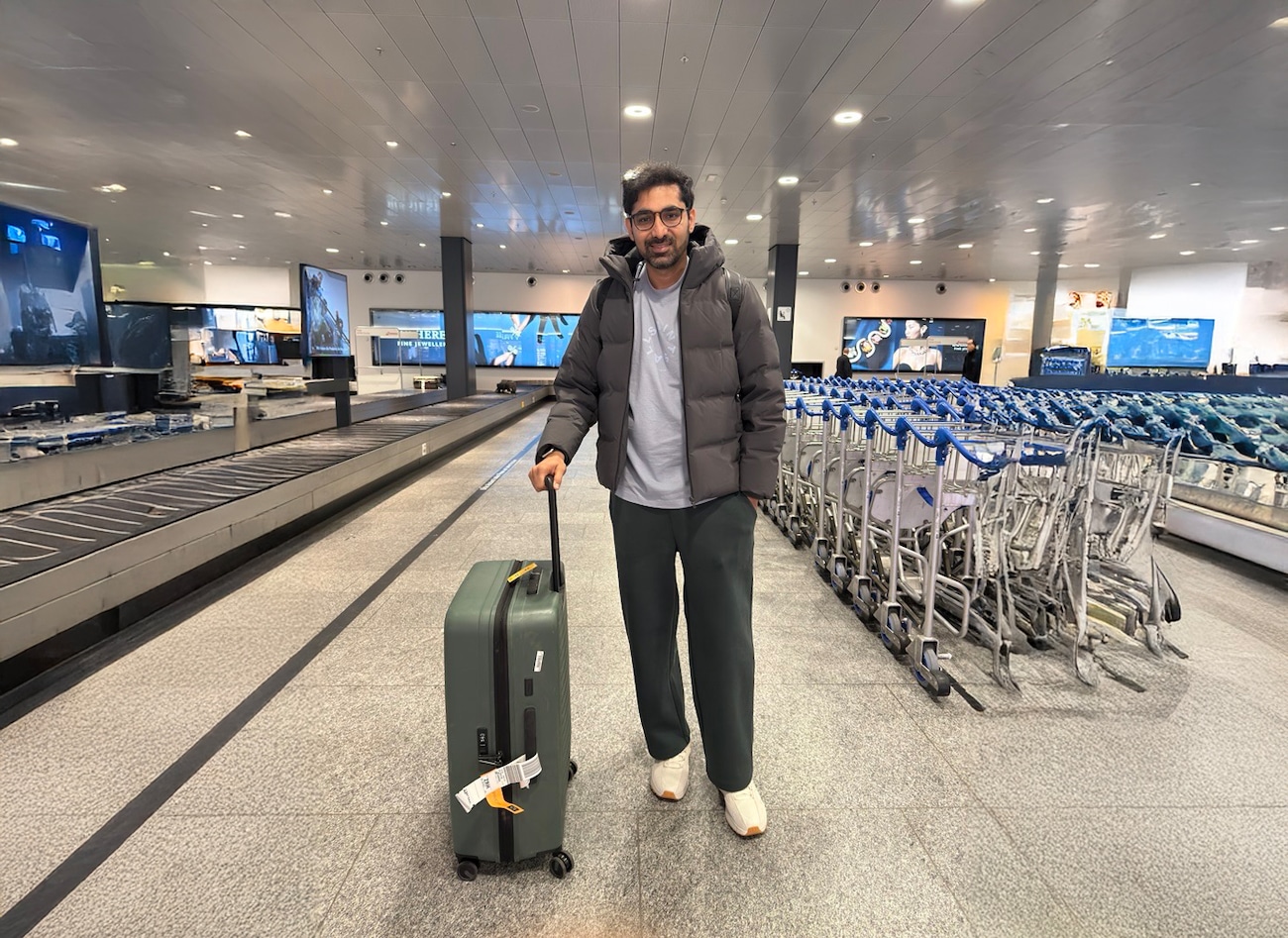
I travel a lot, and I have started doing something slightly strange at airports. Instead of looking at departure boards or checking my phone while I wait, I watch the check-in queue.
And over time, I have realised something interesting. The moment someone lifts their bag onto the weighing scale, you learn something about them. The hesitation, the confidence, the quick unzip to redistribute weight, it tells you more about how a person travels than almost anything else. No two bags look the same, and more importantly, no two approaches to travel feel the same.
I have come to see that this moment at the check-in counter is where travel styles quietly reveal themselves. You don’t need to know where someone is going. Just looking at how they have packed is enough to understand how they like to move, how much they plan, and what they prioritise when they’re on the road.
And once you start noticing it, you can’t unsee it. I have started grouping what I see into types. Not to judge, every style has its logic, and I have been most of these at different points in my life. But the patterns are real. And the first one? You have definitely seen them. You may even be one.
‘Just in Case Traveller
You will find them at almost every check-in counter. Their suitcase goes up on the scale, and there is a brief pause. They are watching the numbers closely. If it crosses the limit, there is a quick unzip, a jacket comes out, maybe a pair of shoes gets shifted into the cabin bag. Sometimes it’s just a matter of a few hundred grams, but it becomes a full exercise in redistribution.
This is one of the most common travel patterns in the world, packing for possibilities. Extra outfits in case plans change. A second pair of shoes in case one gets uncomfortable. Medicines for situations that may never come up. There is logic to all of it. Travel comes with uncertainty, and packing more feels like a way to stay prepared. What is interesting is that most of these “just in case” items rarely get used. Frequent travellers often say they end up wearing the same few clothes on repeat, no matter how much they carry. Yet, the instinct to pack more doesn’t go away easily.
And it has a real impact on how the trip unfolds. Heavier bags mean slower movement, especially in places where you are walking more than usual. Think cobbled streets in Europe, train stations with stairs, or even just navigating a crowded airport. It also adds small but constant friction: waiting longer at baggage claim, worrying about weight limits on the return journey, or deciding what to leave behind when you have shopped a little too much.
And yet, this way of packing continues, because it offers a sense of control. When you have more with you, it feels like you are ready for anything. At the check-in counter, though, that preparation often shows up as hesitation, watching the weighing scale, adjusting the zip, hoping everything fits within the limit. It’s a familiar scene. And for many travellers, it’s how every journey begins.
Minimalist
Just a few steps away from the “just in case” traveller, there is usually someone who approaches the same counter very differently.
One bag. Sometimes a small suitcase, sometimes just a backpack. It goes up on the scale, well within limits, and within seconds, they are done. No rearranging, no second-guessing, no concern about weight.
What is interesting is that this isn’t always about travelling less. It’s about travelling differently. Frequent travellers often move toward this approach over time. Mainly because they have learned what actually gets used on a trip and what doesn’t. After a few journeys, patterns start to emerge: certain clothes never leave the suitcase, certain items are always repacked untouched, and slowly, the list becomes sharper. The biggest shift, though, is what happens during the trip.
With fewer bags, movement becomes easier. You get off a flight and walk straight out without waiting at the belt. You move through train stations without needing lifts or trolleys. Even small things, like changing hotels or navigating busy streets, feel simpler.
There is also a time advantage that people don’t always think about. Baggage claim alone can add 20–40 minutes to a journey, depending on the airport. Over a multi-city trip, that time adds up quickly. Travellers who skip checked baggage often gain hours back without planning for it. Of course, this approach comes with its own discipline. It requires planning outfits more carefully, reusing what you carry, and being comfortable with not having a backup for everything. But for many, that trade-off feels worth it.
I saw this up close recently when I travelled with my friend Sumit, one of India's most prominent bankers. Watching him move through an airport is almost instructive. One bag, always within limits, never checked in, the baggage carousel simply isn't part of his journey. Any friction, a queue, a wait, an unnecessary step, visibly bothers him. Not in a dramatic way, but you can tell. He has made a quiet decision that his time and energy are not going to be spent managing luggage. In all the time I have known him, I don't think I have ever seen him check in a bag. He is, without question, the purest version of the minimalist traveller I have ever met.
Parent Traveller
And then there’s a completely different category of traveller, one that you understand only after you experience it.
The first time I travelled with Raya, the definition of packing changed entirely. At the check-in counter, our bags looked like everyone else’s, suitcases, cabin bags, maybe a stroller. But what was inside them was very different. Every item had a purpose. Extra clothes, backup food, familiar snacks, medicines, small things to keep her engaged during the journey. Nothing felt optional. Because when you are travelling with a child, you are not just packing for a trip. You are preparing for situations you can’t predict, in places you may not be familiar with.
If a solo traveller forgets something, it’s usually an inconvenience. You can buy it, manage without it, or adjust your plans. With a child, that margin for error is much smaller. A missed item can quickly turn into a disruption, at an airport, during a transfer, or even in the middle of the night in a different country. That’s why, if you observe closely, parents are often among the most methodical packers in the queue. Bags are organised by function. Essentials are within reach. There’s a system, even if it looks like a lot from the outside. It also changes how you move.
You are not just thinking about weight limits or convenience anymore. You are thinking about access, what needs to be available immediately, what can go into check-in, what stays with you at all times. Even the decision of which bag goes where becomes important. At the check-in counter, this shows up in small ways. A quick check before sending the bag in. A pause to confirm that everything critical is in the cabin bag. A mental checklist that runs a little longer than usual.
I wrote most of this thinking about my travels with Raya. But thirty days ago, we were blessed with a baby boy, Aarav. And I already know that when we start travelling as a family of four, everything I thought I understood about packing with purpose is going to be relearned from scratch.
System Packer
Somewhere in the middle of these different styles, there is a traveller who treats packing almost like a process.
You will notice it the moment their bag is opened, everything has a place. Clothes are folded uniformly, sometimes rolled. Smaller items are grouped together. Documents, chargers, essentials, they are all easy to access without digging through layers. Tools like packing cubes, organisers, and compression bags are designed for exactly this, making better use of space and reducing the chaos that usually comes with unpacking and repacking.
But beyond the tools, it’s really about how the trip is planned. System packers don’t just think about what to carry; they think about how often they will need it, where they will use it, and how quickly they can access it. A jacket needed during a flight won’t be buried at the bottom. Toiletries are placed in a way that security checks become quicker. Even something as simple as keeping a change of clothes in the cabin bag is often part of the plan. And the difference shows up throughout the trip. Hotel check-ins become quicker because you know exactly where things are. Short stays don’t require full unpacking. Moving between cities feels more controlled, because you’re not constantly reorganising your luggage.
At the check-in counter, this traveller doesn’t stand out because of the size of the bag, but because of how smoothly everything moves. The bag goes up, gets checked in, and that’s it. No adjustments, no last-minute reshuffling.
‘I’ll Figure It Out Traveller
And then there is the traveller who approaches packing very differently.
You will see it at the check-in counter in small ways. A quick unzip to check if something is inside. A pause to ask, “Did I pack that?” Sometimes even a last-minute realisation that something important is missing. This is the traveller who packs light, but not always by design. It could be a charger left behind, a jacket that didn’t make it into the bag, or something more essential like medication or documents. These are the kinds of gaps that don’t show up at home, but become very visible once the journey begins.
Airports, hotel lobbies, and even local markets around the world quietly serve this category of traveller every day. People buying things they already own, just because they didn’t bring them along. Sometimes it’s a minor inconvenience. Other times, it disrupts the flow of the trip more than expected.
What makes this interesting is that it is not always about experience. Even frequent travellers fall into this pattern, especially when they are rushing or trying to pack at the last minute. There is also a mindset behind it. A willingness to adapt, to solve problems as they come up, to rely on the destination rather than preparation. In some cases, that adds a sense of spontaneity to the trip. But it also comes with trade-offs. Time spent searching for essentials in a new place. Paying more for something you already had at home. Adjusting plans because something small was overlooked.
What’s Your Type?
So, what type of traveller are you? There’s no right answer here. Most of us are a mix of these, shaped by our experiences, the kind of trips we take, and even the stage of life we’re in.
But it’s an interesting question to sit with. And the next time you pack your bag, would you do it differently? Let me leave you with that today, see you next time.





 83 videos















Post your Comment
Please let us know your thoughts on this story by leaving a comment.