



Published in the Sunday Indian Express on 26 April 2026
When I first travelled to Japan, like most travellers, I thought I knew what to expect before I got there. We have all seen the images, cherry blossoms in full bloom, the neon lights of Shinjuku in Tokyo, the iconic Mount Fuji framed perfectly in the background. It’s one of those destinations that feels familiar even before you visit.
But the moment you actually land in Japan, you realise something quietly powerful: this experience is very different from what you imagine sitting at home. Every traveller I have spoken to after their first trip to Japan says something similar. Not in the same words, but with the same emotion: “I didn’t expect it to feel like this.”
It’s not disappointment; in fact, it’s quite the opposite. Japan doesn’t fall short of expectations; it surpasses them. But it does so in ways that are subtle, layered, and hard to capture in photos or videos.
So today, I want to go beyond the usual highlights and explore what truly makes Japan so unique. Not the landmarks, but the underlying systems, philosophies, and behaviours that shape how the country functions. Because once you understand those, you begin to see Japan differently.
Silence and Social Order
One of the first things you notice when you land in Japan is something you don’t hear. It’s quiet, but not in the way you would expect.
Tokyo is one of the most densely populated cities in the world. Osaka’s train stations are packed during peak hours. The Shinkansen moves thousands of people every day at incredible speeds. And yet, in the middle of all this movement, there is a calmness that feels almost intentional.
Step into a train, and you will notice it immediately. Conversations are soft, phone calls are rare, and people instinctively switch their phones to silent mode. If someone does speak, it’s brief, controlled, and mindful of the space around them. There’s no signage aggressively enforcing this behaviour; it’s simply understood.
At the heart of this behaviour is a cultural idea called ma, which loosely translates to “space” or “pause.” It’s the idea that what you don’t do is just as important as what you do.
Closely linked to this is another concept, wa, or harmony. Japanese society places a strong emphasis on maintaining balance within a group. The individual adjusts to preserve the collective experience. And in public spaces, that translates into being conscious of how your actions affect others.
There’s very little visible policing of behaviour in public spaces, yet systems function with remarkable order. People queue instinctively. Trains run on time not just because of engineering precision, but because passengers themselves move efficiently. There’s a level of social trust that allows everything to operate smoothly.
For me, this felt unfamiliar at first. We come from environments that are vibrant, expressive, and full of energy. Conversations spill into public spaces. Markets are loud, trains are social, and movement is fluid rather than structured.
There is a warmth in that chaos, but it also means we are less conditioned to think about how our presence affects strangers around us.
Initially, it feels restrictive. You become conscious of your own voice, your movements, even how long you take to stand in one place. But somewhere during the trip, something shifts. You begin to move with the system instead of against it. You start to appreciate the calm, the predictability, the ease it creates for everyone around you.
And then, when you return home, it’s one of the things that stays with you. More so because it shows you a different way a society can function. A way where silence isn’t emptiness, but a shared agreement of respect.
National Design Principle
If there is one thing that defines Japan beyond its culture and behaviour, it’s this: things just work. They work in a way that feels almost perfectly designed for everyday life.
One of the most visible expressions of this is Japan’s vending machine culture. There are approximately 55 lakh vending machines across the country. You will find vending machines on quiet residential streets, in the middle of rural towns, along hiking trails, and sometimes even in places where there’s nothing else around for several hundred metres.
You will see hot coffee and cold tea in the same machine, neatly organised by temperature. Fresh eggs, umbrellas, flowers, neckties, snacks, full meals. And the most remarkable part? Every single one of them works exactly as expected. No trial. No error. No uncertainty.
The underlying philosophy is simple: if something might be needed, it should be available instantly, reliably, and without friction. There should be no unnecessary effort involved in accessing basic needs. And once you start noticing this, you see it everywhere.
Take Japan’s train systems, for example. Trains here run with extraordinary precision. Delays of even a minute are acknowledged and often apologised for. Platforms are clearly marked, boarding is orderly, and passengers instinctively position themselves where doors will open.
Then there’s the konbini, Japan’s convenience stores. You can buy meals, withdraw cash, pay bills, send packages, and even print documents. Even something signage across cities is intuitive, navigation is clear, and systems are designed assuming that even a first-time visitor should be able to figure things out independently.
And because everything works the way it’s supposed to, travel starts to feel effortless. You spend less time figuring things out, and more time simply being present in the experience. And that’s perhaps the most important insight here, Japan is designed to remove friction from everyday life.
Forest Bathing
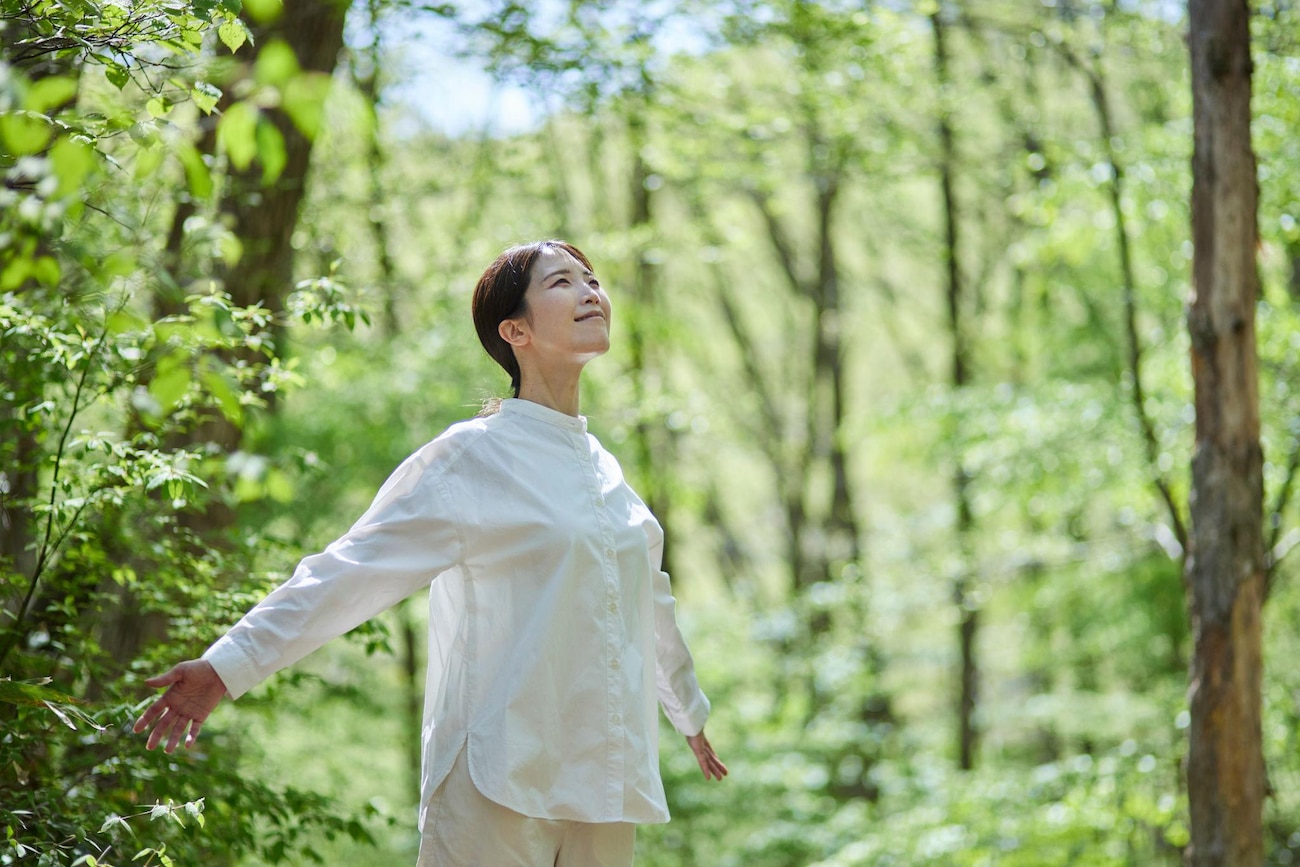
In many countries, nature is seen as an escape, a break from the city, a holiday from work, or a dramatic outdoor experience. In Japan, nature can certainly be all of that, but it is also treated as a form of care. This is where the idea of shinrin-yoku, or “forest bathing,” comes in. It is a recognised wellness practice rooted in a simple idea: spending slow, mindful time in a forest can benefit both your body and mind.
What makes shinrin-yoku so fascinating is that there is no distance to cover, no summit to reach, no pressure to “do” anything. The experience is simple: walk slowly, breathe deeply, and pay attention to what’s around you. The smell of cedar, the movement of leaves, the texture of bark, the sound of water, the changing light through the trees.
And what is especially striking is that Japan has not left this as just a philosophy, it has systematised it. In 1982, shinrin-yoku was formally introduced by the Japanese government as part of a public health approach. And that is why you find designated ‘Forest Therapy Roads’ in different parts of the country. These are curated routes intended to help people slow down and engage with the natural environment in a more deliberate way.
Yakushima Island is perhaps one of the most extraordinary examples. Covered in ancient cedar forests, mist, moss, and silence, it feels less like a destination and more like stepping into another era. Some of its trees are believed to be over 2,000 years old.
The Japanese Alps offer another expression of this relationship with nature: alpine landscapes, forested paths, onsen towns, and a pace that encourages you to notice rather than rush. Even old routes like the Nakasendo Trail, which once connected Kyoto and Edo, carry this sense of nature as something you move through with attentiveness. The journey matters as much as the arrival.
In India, our experience of nature is often tied to pilgrimage, sightseeing, family holidays, or adventure. We travel to hill stations, national parks, beaches, and mountains, but very often the trip still revolves around movement, logistics, and activity. There is always something to cover, something to see, somewhere to reach. In shinrin-yoku, Japan offers another possibility.
The Philosophy of Mastery
Japan is home to more than 5,000 businesses that are over 100 years old. Many of them are small, family-run establishments. And a significant number are restaurants. At first, that sounds impressive. But what makes it truly remarkable is not just their age, it’s their consistency.
In cities like Kyoto, you will find restaurants that have been serving the same dishes, in the same way, for over 300 or even 400 years. Not reinventing their menu every few years. Not expanding into chains. Not chasing scale. Instead, they focus on doing one thing, and doing it exceptionally well, over generations. There’s a quiet discipline to that. In most parts of the world, businesses are built to grow. Growth is measured in scale, reach, revenue, expansion. In Japan, there exists another way of thinking, one that values continuity as much as growth, and in some cases, even more. At the centre of this is a philosophy called monozukuri. It is often translated as “the art of making things,” but that translation doesn’t fully capture its depth. It’s not just about making something, it’s about making it with care, precision, and a deep sense of responsibility toward the craft.
Closely related to this is the idea of the shokunin, the master craftsperson. A shokunin is someone skilled at their work. It is someone who sees their work as a lifelong pursuit of refinement. The goal is not to finish mastering something, but to keep improving it, incrementally, every single day. This mindset shows up most beautifully in Japanese food.
Take kaiseki, for example, Japan’s traditional multi-course dining experience. At a surface level, it is a sequence of dishes. But in reality, it is a carefully constructed expression of seasonality, balance, and timing. Each ingredient is chosen at its precise moment of peak quality. Each dish is presented with intention. The progression of the meal follows a rhythm that has been refined over centuries.
What’s also interesting is how these businesses sustain themselves across generations. Ownership is often passed down within families, but not automatically. The next generation is expected to learn, train, and prove themselves before taking over. In some cases, if there is no suitable successor, families even adopt heirs to ensure continuity of the craft. The focus is always on preserving the quality of the work, not just the name. Because in the end, whether it’s a centuries-old restaurant in Kyoto or a travel brand serving guests across the world, the real measure of success is not just how big you become, but how consistently you deliver, over time. That is what turns a business into an institution. And Japan, more than almost anywhere else, shows you what that looks like in practice.
Why Japan Feels So Different
After a few days in Japan, a pattern begins to emerge. The silence reflects respect, the efficiency reduces friction, the connection to nature encourages balance, and the longevity of businesses shows a deep commitment to mastery over time.
And that’s what makes the experience so memorable. Japan impresses through thousands of small, well-executed details. And that is why I always end a trip to Japan with the same sentiment: “Japan, you leave me in awe, every single time.” Arigato Gozaimasu. See you next time.







 83 videos




















Post your Comment
Please let us know your thoughts on this story by leaving a comment.